معرفی
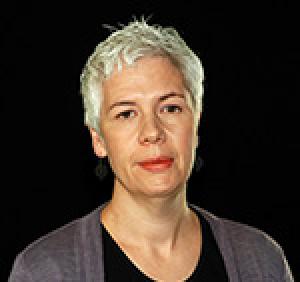
Lucila Carvalho is an Associate Professor at the Institute of Education, Massey University, Auckland, New Zealand, where she also serves as the BA (Education) coordinator and teaches in both Bachelor’s and Master’s programs. Her academic career spans institutions across Australia, New Zealand, the UK, and Brazil, with deep engagement in interdisciplinary research at the intersection of education, design, and technology.
Her research focuses on design for learning and new media & technology, exploring how knowledge, digital and physical resources, and human activity interact in learning environments. She applies sociological and systemic functional linguistic perspectives to the design of e-learning, with a strong emphasis on productive networked learning and postdigital learning spaces. Her work bridges education, design, software engineering, and museum-based learning experiences.
Lucila is a co-editor of influential books including The Architecture of Productive Learning Networks (Routledge, 2014) and Place-Based Spaces for Networked Learning (Routledge, 2017), and is currently co-authoring Postdigital Learning Spaces: Towards Convivial, Equitable and Sustainable Spaces for Learning (Springer, 2024). She was a lead researcher in Professor Peter Goodyear’s Laureate Fellowship program at the University of Sydney (2011–2016), contributing to foundational work in learning networks.
She completed her PhD in 2010 at the University of Sydney’s School of Architecture, Design & Planning under Professor Andy Dong, where she developed Design Studio, an e-learning environment hosted at the Powerhouse Museum in Sydney. Her interdisciplinary background enables her to present and publish across education, sociology, design, and software engineering domains.
- Co-Editor, The Architecture of Productive Learning Networks, Routledge, 2014
- Co-Editor, Place-Based Spaces for Networked Learning, Routledge, 2017
- Co-Author (forthcoming), Postdigital Learning Spaces, Springer, 2024
Lucila has advised and contributed to curriculum development in both undergraduate and postgraduate programs, including the Master of Learning Sciences and Technology and the Bachelor of Education at the University of Sydney. Though specific grants are not listed, her participation in a Laureate Fellowship—a prestigious Australian Research Council award—indicates significant research funding engagement. She continues to shape future directions in learning design through her ongoing research and upcoming publications.
She is actively involved in the academic community, regularly presenting at international conferences across education, design, and technology fields. Her work contributes to evolving pedagogical frameworks that integrate physical and digital learning spaces, aiming for convivial, equitable, and sustainable models of education.