معرفی
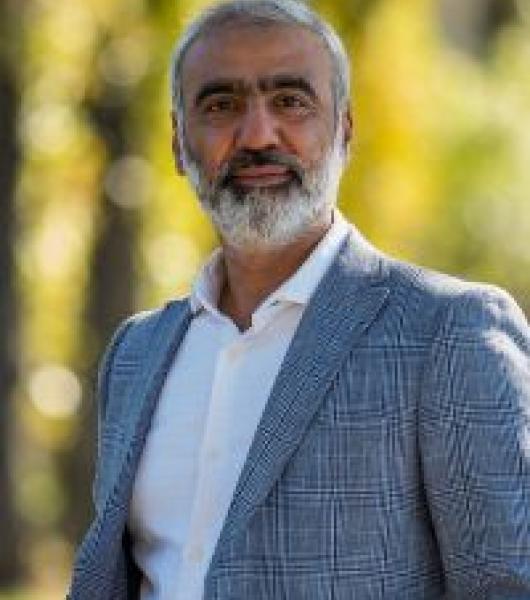
Luca Maria Olivieri is an Associate Professor at the Department of Asian and North African Studies, Ca' Foscari University of Venice. He serves as Deputy Director of his department and directs multiple international research initiatives including the Italian Archaeological Mission in Pakistan (IAM), the Marco Polo Research Center, and the ACT-Field School Project in Swat. His work spans archaeology, art history, and environmental studies of South and Central Asia.
- Research Focus: Settlement and environmental archaeology, Buddhist sacred areas, climate change impacts on ancient civilizations, Gandharan art, Silk Road studies
- Key Projects: Late Antique Swat Ecology (SPIN 2021), Ellenismo e India (Saidu Sharif I), Digitization of Gandharan Artefacts (Bochum), Social uses of wine in Gandhara (2020-2022)
- Collaborations: Max Planck Institute, Harvard Medical School, Ruhr Universität Bochum, Princeton University, Tsinghua University
His research combines fieldwork with interdisciplinary analysis, including bio-molecular archaeology and climate history. Recent publications focus on Swat Valley archaeology, Gandharan stupa construction, and Late Antique climate resilience. He has contributed to Science (2019) on South/Central Asian genomics.
Scientific Honors
- Sitara-i-Imtiaz (2016, Pakistan)
- Ufficiale OSI (2013, 2017) and Grande Ufficiale OSI (2017, Italy)
- Fellow, Royal Asiatic Society (2021)
- Guest Fellow, Tsinghua University (2023-2026)
As an educator, he teaches Archaeology of the Silk Road and Gandharan Cultures at BA and MA levels. He curates the ACT Field School Reports series and serves on editorial boards of Journal of Asian Civilizations, East and West, and Journal of Research Society of Pakistan. His fieldwork in Pakistan since 1987 includes 40 excavation campaigns and 15 restoration projects.
Current advisory roles include UNESCO projects in Afghanistan, the Safeguarding Cultural Heritage in Khyber Pakhtunkhwa (2024), and the Mapping Archaeological Heritage in South Asia (MAHSA) (2025). He leads the Saving Bazira Archaeological Site initiative (2022-2024) under ALIPH funding.