معرفی
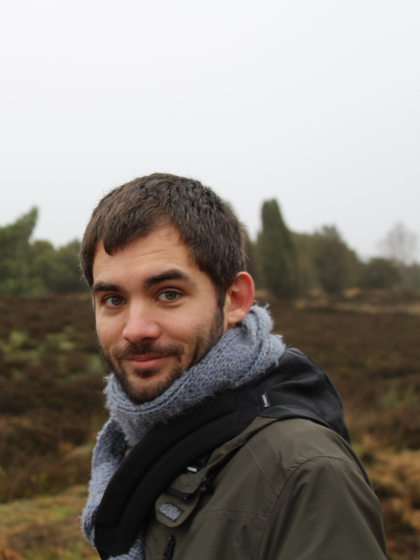
Luc Amkreutz serves as Special Professor of Public Archaeology at Leiden University, Netherlands, with a focus on European prehistory, particularly the Neolithic and Bronze Age periods. His research encompasses Doggerland heritage, artifact biographies from Mesolithic and Neolithic Europe, and the role of giant swords in Bronze Age Europe (1500-1100 BC).
Professor Amkreutz's research interests center on the construction of archaeological heritage, European prehistory, and the social dimensions of ancient material culture. His work examines how communities in prehistoric Europe expressed identity through burial practices, ceremonial objects, and settlement patterns. He investigates the transmission of cultural practices across regions and time periods, with particular attention to the Neolithic transition and Bronze Age transformations in Northwestern Europe.
His current research projects include the analysis of the Ommerschans hoard and its giant swords, which provides insights into Bronze Age ritual practices and social organization. Amkreutz also contributes to the 'Construction of Heritage' theme at Leiden University, exploring how archaeological narratives are formed and communicated to contemporary audiences.
Professor Amkreutz serves as curator for the 'Bronze Age: Fire of Change' exhibition at the National Museum of Antiquities (October 18, 2024 - March 16, 2025) and hosts a related six-part podcast series where he discusses Bronze Age topics with experts. His recent publication 'NAR 76: Elsloo-Koolweg Revisited' (2022) represents a significant contribution to Linear Bandkeramik studies through modern reanalysis of burial grounds.
As part of his academic service, Amkreutz collaborates with the National Museum of Antiquities on public outreach initiatives, bridging scholarly research with museum exhibitions and educational programming. His work demonstrates a commitment to making archaeological research accessible to broader audiences while maintaining rigorous academic standards.
Professor Amkreutz maintains active research collaborations across European institutions focused on prehistoric archaeology and heritage studies. His work on Doggerland heritage connects underwater archaeology with climate change studies, examining how past societies adapted to environmental transformations.