معرفی
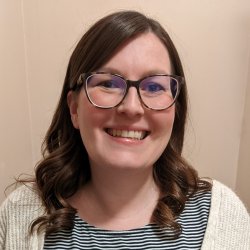
Lisa Holbrook is a Lecturer in One Health-One Medicine (Non-Communicable Disease) at the University of Surrey, where she joined in 2022. She is affiliated with the School of Veterinary Medicine within the Faculty of Health and Medical Sciences. Her academic journey began with a BSc in Biological Sciences from the University of Reading in 2005, followed by a PhD in Protein Biochemistry and Cell Biology in 2010 from the same institution. Prior to joining Surrey, she held postdoctoral positions at Imperial College London, Oxford University, University of Reading, and King's College London, where she developed expertise in platelet function controlled by redox modulation.
Her research interests focus on understanding how redox proteins such as thiol isomerases and NADPH Oxidases regulate disease development and progression in humans and animals. Much of her work has investigated the impact of these proteins on platelet activation, platelet signaling, and thrombosis. Her current research aims to explore how platelet-secreted proteins regulate cell migration and metastasis in cancer. This research spans multiple disciplines including protein biochemistry, cardiovascular biology, and cancer research.
The analysis of her publication history reveals a consistent focus on platelet biology and redox regulation, with particular emphasis on thiol isomerases and their role in thrombosis. Her work demonstrates a progression from fundamental biochemical studies to translational research with potential therapeutic applications, particularly in developing novel anti-thrombotic strategies that don't compromise hemostasis.
Her scientific recognition includes being an Editor's Awards finalist for the Journal of Thrombosis and Haemostasis (JTH) in 2017 and receiving the ISTH Young Investigator Award in 2009. These awards highlight her significant contributions to the field of thrombosis and hemostasis research.
As an academic supervisor, she currently mentors Miss Lily Bull, whose research focuses on platelet signaling and redox regulation. Her teaching responsibilities include multiple modules (VMS1004, VMS1005, VMS1006, VMS2005, VMS2006, VMS3008, VMS3009) within the veterinary medicine program, demonstrating her commitment to both research and education in her field.
Her laboratory work focuses on the molecular mechanisms of platelet function, particularly examining how redox proteins regulate cellular processes related to thrombosis and cancer metastasis. Her research team investigates the role of thiol isomerases in platelet activation and their potential as therapeutic targets for anti-thrombotic treatments.