معرفی
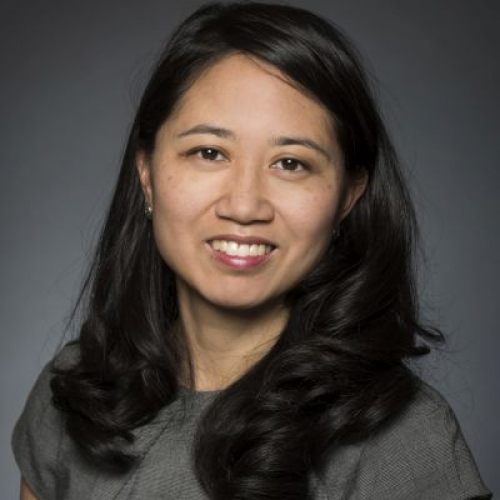
Lindsey Kingston serves as Associate Professor of International Human Rights in Webster University’s College of Humanities and Social Sciences, where she directs the Institute for Human Rights and Humanitarian Studies. She oversees the undergraduate human rights program and the journal Righting Wrongs: A Journal of Human Rights, maintaining an active role in institutional human rights education and research.
Her academic credentials include:
- Ph.D. in Social Science from Syracuse University’s Maxwell School of Citizenship and Public Affairs
- M.A. in Political Science from Syracuse University
- M.A. in Ethics and International Affairs from American University
- B.S. in Journalism from Boston University
Kingston’s research pioneers the concept of 'functioning citizenship'—examining how individuals maintain rights-protected relationships with governments outside formal nationality frameworks. As a leading expert on statelessness, her work bridges forced migration studies, Indigenous rights advocacy, and transnational social movement analysis. Recognized by the United Nations High Commissioner for Refugees, her scholarship fundamentally challenges conventional citizenship paradigms through empirical and theoretical innovation.
Her publications since 2018 demonstrate sustained focus on human rights implementation gaps, particularly regarding stateless populations. The trilogy spans legal theory (Statelessness, Governance, and the Problem of Citizenship), philosophical foundations of personhood (Fully Human), and pedagogical frameworks for human rights education—collectively addressing systemic failures in global protection regimes through interdisciplinary lenses.
Kingston’s scientific recognition includes:
- Fulbright Scholarship at Università degli Studi di Milano
- International Studies Association’s 2020 Human Rights Best Book Award
Through the Institute for Human Rights and Humanitarian Studies, she cultivates academic-practitioner collaboration, directing curriculum development and research initiatives that connect classroom theory with refugee advocacy and policy reform. Her leadership establishes Webster University as a nexus for critical human rights scholarship with tangible field applications.