معرفی
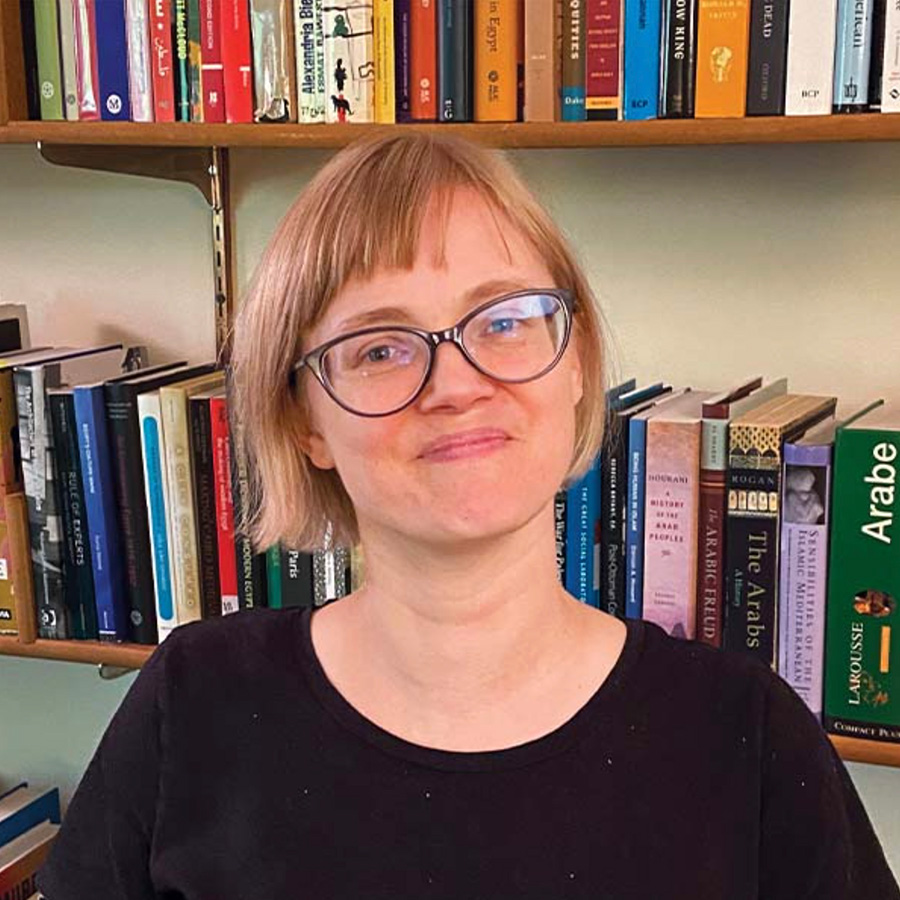
Libby Miller serves as a Senior Adjunct Assistant Professor of Art History and General Studies at Whitman College, teaching Art History and Visual Culture Studies while participating in the First Year Seminars Program. She concurrently directs the Maxey Museum and acts as Whitman’s Native American Graves Protection and Repatriation Act (NAGPRA) coordinator, reflecting deep engagement with museum ethics and indigenous rights.
Her academic foundation includes a DPhil in History of Art (University of Oxford, 2012), an MSt in Oriental Studies (Oxford, 2008), and dual Bachelor’s degrees in Arabic Language and Literature & History of Art and Archaeology (Université Libre de Bruxelles, 2007).
Miller’s research investigates how historical narratives shape contemporary society, with specialized focus on monuments, memorials, and museums. She examines the construction of fine arts discourse in 19th–20th century Egypt, Western appropriations of ancient Egypt, and visual culture’s role in identity formation. Her interdisciplinary approach bridges art history, postcolonial theory, and critical heritage studies, emphasizing the Arabic-speaking world’s visual traditions and decolonial frameworks.
Her recent scholarship reveals a consistent trajectory toward community-engaged praxis addressing colonial legacies. Projects like recontextualizing campus monuments and curating exhibitions on Middle Eastern photography demonstrate applied scholarship that bridges academic research with public dialogue, prioritizing indigenous perspectives and institutional accountability.
No scientific awards were documented in source materials.
Miller mentors students through grant-funded community projects, notably advising the 2020 Whitman College Community Engaged Summer Research Program grant for recontextualizing the Marcus Whitman statue. Her collaborative approach integrates campus stakeholders with indigenous communities, particularly through NAGPRA compliance work.
As Maxey Museum Director and NAGPRA coordinator, she leads Whitman’s ethical curation initiatives and repatriation processes, driving institutional commitments to inclusive excellence through museum programming that confronts colonial histories and centers marginalized voices.