معرفی
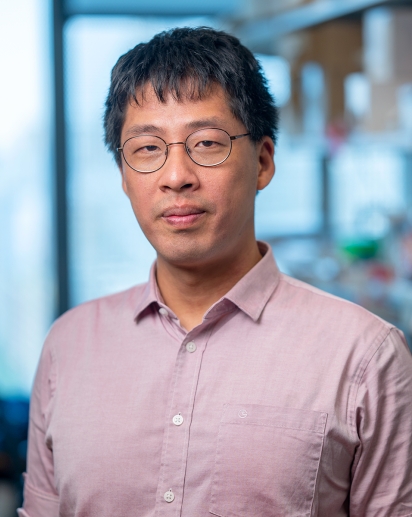
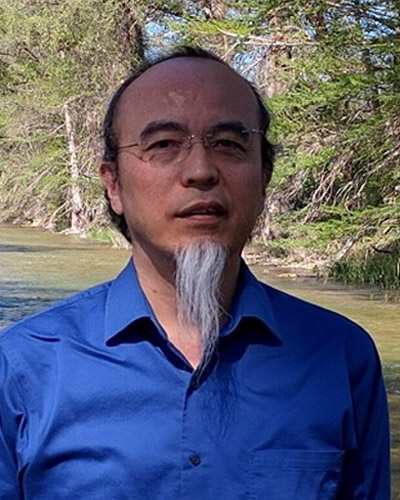
Liao Chen is a Professor in the Department of Physics and Astronomy at the University of Texas at San Antonio (UTSA), College of Sciences. He conducts interdisciplinary research at the interface of physics, biology, and computational science, focusing on the mechanistic understanding of membrane transport proteins and molecular interactions using high-performance computing.
- Ph.D. in Physics, Institute of Theoretical Physics, Academia Sinica
- M.S. in Physics, Institute of Theoretical Physics, Academia Sinica
- B.S. in Physics and Education, Xingyang Teachers College
His research interests lie in biophysics, theoretical and computational physics, with a focus on in silico modeling of biological macromolecules. He specializes in molecular dynamics simulations to study membrane transporters such as aquaporins (AQP1, AQP3, AQP4, AQP5), glucose transporters (GLUT1), and aquaglyceroporins (PfAQP). His work aims to uncover how structural fluctuations and cellular environments modulate protein function, with applications in drug discovery and disease mechanisms.
The 15 most recent articles reflect a strong trend in quantitative biophysics, particularly in computing binding affinities, membrane permeability, and gating dynamics with chemical accuracy. His methodological innovation, hSMD (hybrid steered molecular dynamics), enables reproducible and efficient free energy calculations. Research spans from fundamental physical principles to biomedical applications, including studies on malaria parasite proteins and potential channel blockers.
Liao Chen has secured research funding from the NIH, enabling extensive computational studies on supercomputers like Frontera and Lonestar 5, as well as experimental validation using in-lab instruments. He actively supervises graduate and undergraduate researchers, mentoring students in both computational and experimental techniques.
- NIH grants support ongoing research
- Utilizes Frontera, Lonestar 5, and in-lab high-performance computing cluster
- Employs in vitro assays such as hemolysis, stopped-flow, and microfluidics to validate computational predictions
His lab has produced numerous publications in reputable journals, contributing to the understanding of protein function, nanoparticle interactions, and electronic transport in nanostructures. He has developed open-source software (hSMD) for the academic community, promoting reproducible and accurate binding free energy computations.