معرفی
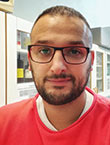
Lee Wharton is a Senior Lecturer in the School of Exercise & Nutrition Sciences within the Faculty of Health at Queensland University of Technology (QUT). With a PhD completed in 2015 from the University of Queensland focusing on coaching expertise, he has established a robust research profile spanning sports science, health education, and exercise physiology. His work demonstrates significant contributions to understanding muscle physiology, coaching methodology, and school-based physical activity interventions.
Wharton's educational background includes a PhD in Sports Coaching from the University of Queensland (2015), with earlier academic training evident in his foundational publications dating back to 2006. His research interests encompass sports coaching expertise, muscle physiology (particularly temperature effects), assessment practices in Health and Physical Education, and men's health interventions through sporting contexts. A growing emphasis in his recent work focuses on culturally safe research with Aboriginal and Torres Strait Islander communities.
His publication record shows a clear trajectory from foundational coaching expertise research toward increasingly complex community-based health interventions, particularly the Aussie-FIT program which uses sporting clubs to address men's health. The articles demonstrate strong interdisciplinary connections between exercise physiology, public health, and educational practice, with notable emphasis on implementation science and real-world application of research findings. His most downloaded works focus on menstrual cycle effects on muscle strength and coaching expertise recognition.
- Major Research Programs: Aussie-FIT men's health program, muscle temperature/physiology studies, HPE assessment research
- Key Collaborators: Michelle-Anne Bradford (assessment), Toby Pavey (men's health), Patrick Rodrigues (exercise physiology)
Wharton actively contributes to both research and educational practice, with numerous presentations at national conferences including ACHPER and Asia-Pacific Society for Physical Activity events. His work bridges theoretical understanding with practical application in school and community settings, particularly through sporting contexts as vehicles for health promotion.