معرفی
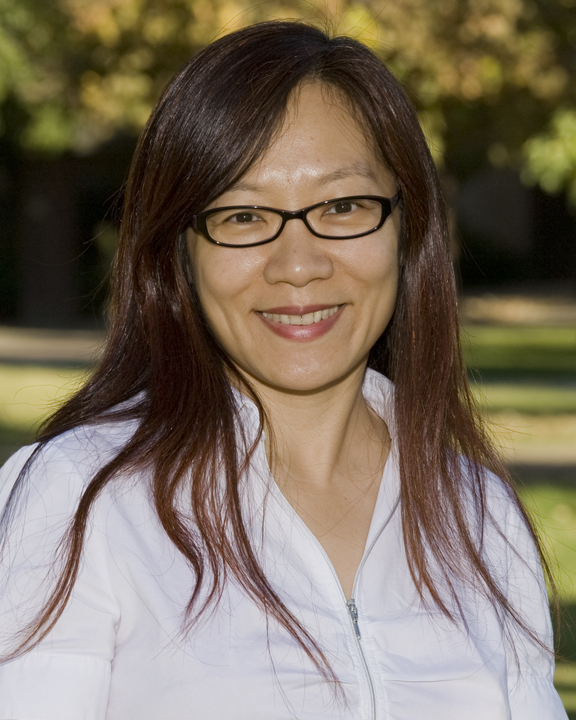
Dr. Le Xu serves as a Lecturer in the Department of Strategy and Policy at the National University of Singapore (NUS) Business School. Her academic appointments include coordination of the Business Economics specialisation and teaching roles in economic strategy, global economy, and managerial economics courses since 2018.
- Bachelor of Science in Mathematics, Northwestern Polytechnical University (2000-2004)
- Master of Science, Northwestern Polytechnical University (2004-2007)
- PhD in Economics, University of Manchester (2007-2011)
Dr. Xu's research spans Managerial Economics, Chinese and Southeast Asian Economies, and Behavioral Decision Theory. Her work examines economic strategy through game theory frameworks while investigating consumer behavior, gift-giving psychology, and intertemporal choices. Recent publications reveal a strong focus on framing effects, AI-human interaction in sales contexts, and memory mechanisms in social relationships.
Her publication trends indicate a sophisticated integration of traditional economic modeling with behavioral insights, particularly examining how cognitive biases affect market decisions and social interactions. The research demonstrates methodological diversity spanning experimental economics, field studies, and theoretical modeling.
- 10 Years Award (2021)
- 5 Years Award (2016)
Dr. Xu actively mentors students while serving on the NUS Social Committee (2018-2020) and as Business Economics Coordinator (2021-2025). Her teaching philosophy emphasizes real-world application through contemporary business cases and economic indicators. She has taught courses including Managerial Economics, Global Economy, and Economics of Strategy, consistently receiving high student evaluations for her interactive methods and supportive approach.
As a media commentator, she provides economic analysis for ThinkChina, The Straits Times, and CNA, leveraging expertise in China's economy and business environment. Her sixth-edition Chinese textbook on Managerial Economics (co-authored with Prof. I.P.L. Png) demonstrates significant scholarly impact.