معرفی
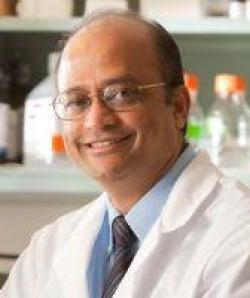
Kumar Alagramam, PhD is an Associate Professor in the Department of Otolaryngology and a Professor in the Department of Genetics and Genome Sciences at Case Western Reserve University School of Medicine. His research focuses on understanding the genetic basis of hearing loss, with particular expertise in sensory hair cell development and noise-induced hearing loss.
Dr. Alagramam earned his Masters in Biotechnology and PhD in Cell and Molecular Biology from the University of Tennessee at Knoxville. He completed his postdoctoral training at the Oak Ridge National Laboratory in Tennessee and Case Western Reserve University.
With over 18 years of experience in mouse genetics and molecular biology, Dr. Alagramam specializes in mouse and guinea pig models of hearing loss, particularly focusing on Usher syndrome. His groundbreaking work led to the discovery of protocadherin 15 (Pcdh15) and its association with deafness in both mice and humans in 2001. His laboratory has extensively studied how mutations in Pcdh15 affect hair bundle morphology and polarity. More recently, his research has expanded to investigating Usher syndrome type 3A, caused by mutations in the human clarin-1 gene.
Dr. Alagramam's recent publications reveal a consistent focus on the molecular mechanisms of hearing disorders, particularly Usher syndrome and related genetic hearing loss conditions. His work spans from basic research on hair cell development and function to translational studies exploring potential therapeutic approaches. The research demonstrates expertise in mouse genetics, molecular biology techniques, and inner ear physiology.
Dr. Alagramam has made significant contributions to our understanding of genetic hearing disorders through his laboratory research and publications in prestigious journals. His work on Pcdh15 and clarin-1 has provided critical insights into the molecular pathways underlying hearing loss.
As principal investigator of the Alagramam Lab, he leads research on the genetic program associated with hair cell development and function in the inner ear. His laboratory continues to investigate the precise role of Pcdh15 in hair bundle morphogenesis and mechanotransduction, with the ultimate goal of developing interventions for genetic hearing disorders.