معرفی
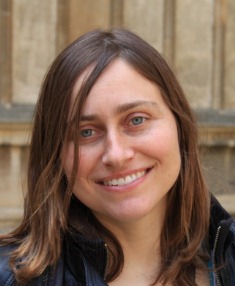
Kimberly Strong is a Professor in the Department of Physics at the University of Toronto, where she has held academic positions since 1996. She earned her B.Sc. (1986) from Memorial University of Newfoundland and D.Phil. (1992) from the University of Oxford, followed by postdoctoral work at the University of Cambridge and York University. Her research focuses on atmospheric remote sounding, ozone chemistry, climate science, and planetary atmospheres, with extensive fieldwork in the Arctic via the Polar Environment Atmospheric Research Laboratory (PEARL) in Eureka, Nunavut.
- Director, School of the Environment (2013-2018)
- Chair, Department of Physics (2019-2024)
- Acting Vice-Dean, Graduate Education (2025)
Her research spans ground-based, balloon, and satellite remote sensing to study stratospheric and tropospheric trace gases. Key projects include the Arctic Atmospheric Science program (PEARL/CANDAC), SCISAT satellite validation, and planetary atmosphere modeling for Mars/Venus. Current work investigates urban pollution, wildfire impacts on Arctic air quality, and infrared spectroscopy of greenhouse gases. She leads the University of Toronto Atmospheric Observatory (TAO) and contributes to networks like NDACC, TCCON, and Pandonia Global Network.
Recent publications emphasize Arctic ozone trends, greenhouse gas measurements, and infrared cross-sections for climate modeling. Her datasets include long-term studies of stratospheric chemistry, urban pollutant transport, and planetary atmospheric dynamics, often involving collaborations with NASA, Environment Canada, and international institutions.
Scientific awards:
- Patterson Distinguished Service Medal (2022)
- Willet G. Miller Medal (2022)
- APECS Mentorship Award (2022)
- Fellow of the Royal Society of Canada (2019)
- Fellow of the Canadian Meteorological and Oceanographic Society (2021)
Her students include PhD candidates and alumni working on Arctic ozone depletion, MAX-DOAS spectroscopy, infrared remote sensing, and planetary atmosphere modeling. She previously directed NSERC CREATE Training Programs and mentored over 40 graduate and undergraduate researchers.