معرفی
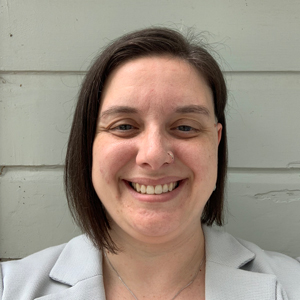
Dr. Kimberlee Flatt is a faculty member in the Department of Educational Psychology within the College of Education at the University of North Texas. She teaches in the Master of Arts in Professional Counseling, School Counseling, and Marriage and Family Therapy programs, where she integrates experiential and behavioristic approaches to foster professional fluency and confidence in her students.
Her educational background includes a Ph.D. in Educational Psychology with a focus on Special Education and Autism Intervention from the University of North Texas (2018), and dual M.A. degrees in Professional Counseling and School Counseling from Amberton University (2011). She also holds a B.S. in Applied Behavior Analysis from the University of North Texas (2001).
Dr. Flatt's research and clinical work center on neurodiversity, particularly autism. Her personal experience as a daughter, wife, and mother of autistic individuals deeply informs her professional mission. She focuses on supporting autistic adults during the transition to post-secondary life and investigates interventions for restricted and repetitive behaviors. Her work promotes a strengths-based perspective, helping neurodivergent individuals (including those with ADHD, Tourette’s, OCD, and Dyslexia) recognize their unique talents and navigate challenges.
Though no publications are listed, her research agenda reflects a growing contribution to the fields of special education, counseling, and autism intervention, with emphasis on practical, experiential learning and real-world application.
- Support for Autistic Adults in Higher Education
- Therapeutic Approaches to Repetitive Behaviors
- Professional Identity Development in Counselors
- Experiential Learning in Counseling Education
- Neurodiversity-Affirming Practices
- Behavioristic and Applied Behavioral Analysis Frameworks
Dr. Flatt is deeply committed to mentoring future counselors and advancing neurodiversity-affirming practices. While no formal advising or grant information is provided, her pedagogical approach emphasizes professional writing, ethical communication, and clinical readiness. Her private counseling practice extends her impact beyond academia, directly serving neurodivergent clients. She does not appear to lead a formal lab or research team, but her integrative teaching model functions as an experiential training environment.