معرفی
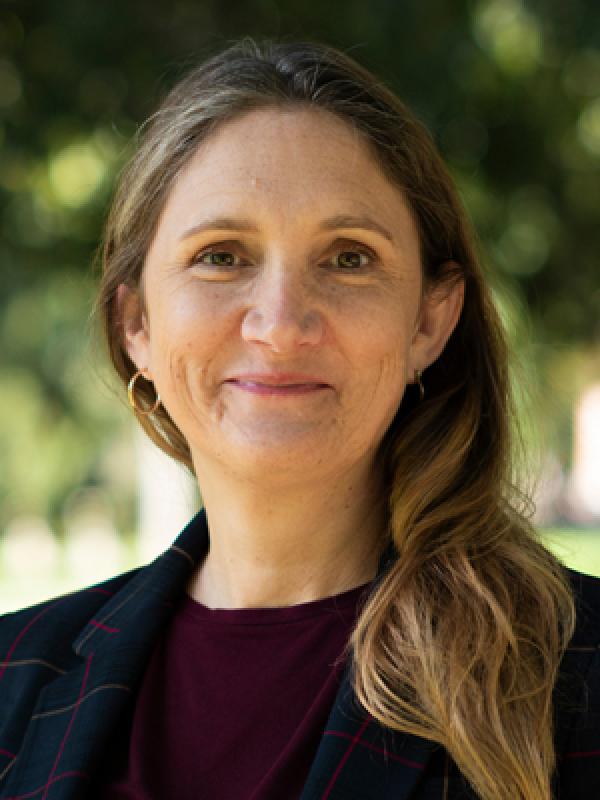
Kendra McSweeney is a Professor of Geography at The Ohio State University, affiliated with the College of Arts and Sciences. Her research focuses on human-environment interactions, particularly in Latin America, addressing issues like political ecology, conservation, and the socioecological impacts of drug trafficking. She holds a Ph.D. from McGill University (2000), an M.Sc. from the University of Tennessee (1993), and a B.A. from McGill University (1991).
Her work spans decades of field research in Honduras, Central America, and Brazil, examining topics such as climate resilience, indigenous demography, and the environmental consequences of drug policies. McSweeney has led interdisciplinary projects funded by NASA, NSF, and the Open Society Foundations, totaling over $2 million in grants.
McSweeney’s research has been recognized with prestigious awards, including AAAS and American Academy of Arts & Sciences Fellowships (2024 and 2023), the Alexander and Ilse Melamid Medal (2020), and the CAPE Distinguished Career Award (2020). She has authored over 70 peer-reviewed articles and edited books, including co-editing Geographical Fieldwork in the 21st Century (2021).
Her teaching spans undergraduate courses like Our Global Environment and graduate seminars on fieldwork and political ecology. McSweeney advises students on topics ranging from narco-trafficking’s environmental impacts to indigenous health. She collaborates with international organizations such as the World Resources Institute and UNICEF, bridging academic research with policy and community engagement.
Current projects include modeling drug-trafficking networks and their environmental effects, and studying demographic changes among Latin America’s indigenous populations. McSweeney is also a Phi Beta Kappa Visiting Scholar (2024-25), emphasizing her role in public scholarship and education.