معرفی
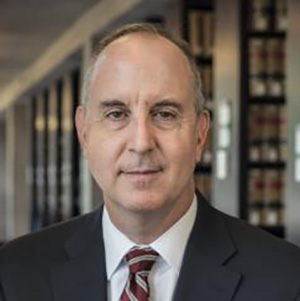
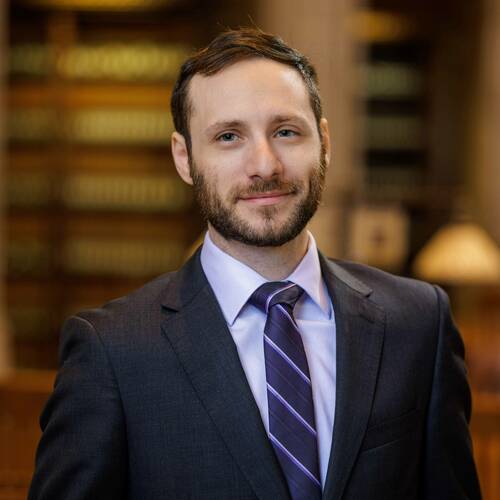
Keith Sharfman is a Professor of Law at St. John's University School of Law in Jamaica, New York, where he co-directs bankruptcy studies with Professor Warner. His academic career spans multiple prestigious institutions, having been tenured at Rutgers and Marquette Universities and having taught as a visitor at Cornell and Florida State Universities.
Professor Sharfman received his B.A. in economics and international relations from Johns Hopkins University and his J.D. from the University of Chicago, where he served as a research assistant to Judge Richard Posner and Professor Cass Sunstein. His professional experience includes clerking for Judge Frank Easterbrook of the U.S. Court of Appeals for the Seventh Circuit and practicing as an associate at Latham & Watkins, where he handled antitrust, bankruptcy, corporate finance, and intellectual property matters.
His research focuses on antitrust, bankruptcy, commercial law, corporate finance, corporate reorganization, law and economics, and legal valuation. His scholarly work demonstrates deep expertise in corporate valuation mechanisms, bankruptcy proceedings, and the intersection of law and economics in corporate contexts. Professor Sharfman has published extensively in top law journals including the Stanford Journal of Law, Business & Finance, Florida State University Law Review, and Virginia Law & Business Review.
His most recent scholarship examines judicial appraisal theory, third-party litigation funding, and derivative suits in corporate contexts, showing continued relevance and engagement with contemporary legal issues. His 2025 amicus brief in the Tesla derivative litigation demonstrates his ongoing influence in shaping corporate governance discourse.
- American Bankruptcy Law Journal Fellow (2006)
- Member of American Bankruptcy Law Journal's editorial advisory board (2007)
- Faculty advisor to the American Bankruptcy Institute Law Review
Professor Sharfman's career reflects a seamless integration of academic scholarship and practical legal experience. His work bridges theoretical legal economics with real-world corporate and bankruptcy practice, making significant contributions to both academic discourse and practical legal frameworks. His role as faculty advisor to the American Bankruptcy Institute Law Review underscores his standing within the bankruptcy law community. His teaching and scholarship continue to shape the next generation of legal professionals specializing in corporate and bankruptcy law.