معرفی
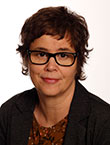
Dr Katerina Cerna is an Assistant Professor (Associate Senior Lecturer) at the School of Information Technology, Halmstad University, Sweden. She leads research on participatory and more-than-human design, embedding learning sciences, sustainability and care ethics into technology development. She coordinates work in the REBEL research programme, is Area Leader for Participation in CAISR Health, and drives projects such as PadAI, Grow 2B Well and PAS-SAP.
Education:
- PhD in Education Sciences, University of Gothenburg
Research Interests:
Her scholarship converges around enabling meaningful participation in design processes, especially for marginalised or vulnerable groups. Current strands include:
- Mental-health technology co-designed with young adults (PadAI)
- Embodied and multispecies engagements with plants for urban wellbeing (Grow 2B Well)
- Care-full participatory design with older adults (ACCESS, Demokit)
- Proxy-user methods for hard-to-reach populations (PAS-SAP)
Publications at a glance:
The 2022-2025 corpus reveals an intensifying focus on mental health support systems, multispecies and more-than-human design, and care-centred participatory methods. Qualitative, ethnographic and design-research methodologies dominate, often applied in contexts of ageing, disability, youth mental health and environmental sustainability.
Scientific Awards & Fellowships:
- No specific awards listed; recognition is implicit through sustained funding (REBEL, CAISR Health, ACCESS, PadAI, PAS-SAP, Grow 2B Well).
Advising & Grants:
- Principal investigator/supervisor on PadAI (participatory AI for youth mental health)
- Area Leader for Participation – CAISR Health
- Work-package leader – REBEL programme “Re-imagining Future Smart Living”
- Coordinator – ACCESS (postdoc project on older adults’ digital literacy)
- Workshop leader – I.N.S.E.C.T. summer camps on multispecies design
Labs & Teams:
She is embedded in the REBEL collective – an interdisciplinary group of researchers, designers and practitioners re-imagining inclusive futures. She collaborates closely with the CAISR Health research environment and has ongoing partnerships with Chalmers University of Technology, University of Gothenburg, Umeå University, Bergen University and Salzburg University.