معرفی
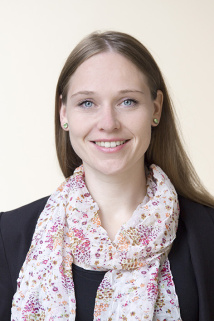
Prof. Dr. Karina Höveler is a Professor of Mathematics Education at the University of Münster's Faculty of Mathematics and Computer Science. She has held a W2 Professorship since April 2017, focusing on inclusive mathematics education for primary school teachers. Currently on maternity and parental leave from May 2024 through January 2025, she remains actively engaged in research and academic leadership.
- Doctorate (Dr. paed.) in Mathematics Education from TU Dortmund (2007-2014)
- University studies at Carl von Ossietzky University of Oldenburg (2001-2006)
- Senior Academic Councillor at TU Dortmund (2015-2017)
Her research centers on inclusive mathematics education, particularly combinatorial problem-solving approaches and digital learning environments. She leads the LiiMU (Learning environments in inclusive mathematics education) and ZoZ (Counting without counting) research initiatives. Her work bridges theoretical frameworks with practical classroom applications, emphasizing how primary students develop mathematical thinking.
Prof. Höveler's publications show a strong focus on combinatorial thinking in primary education, inclusive teaching methods, and digital tools like the "Kombi" app for problem-solving. Her recent work (2022-2024) demonstrates increasing emphasis on digital scaffolding, mathematical proof processes for young learners, and professional development for teachers in inclusive settings. The publications reveal a consistent trajectory from foundational combinatorial research to practical classroom applications and teacher training.
- Active member of the Society for Mathematics Didactics (GDM) since 2008
- Member of GDM's Primary School Working Group since 2007
As an educator, Prof. Höveler supervises numerous courses on inclusive mathematics teaching, primary mathematics education, and research methodology. She collaborates extensively with colleagues like Prof. Daniel Frischemeier, Prof. Bettina Rösken-Winter, and Franziska Tilke on research projects and teaching initiatives. Her grant portfolio includes significant projects like QuaMath (2023-2028) and MaCo (Mathematics catch-up after Corona) initiatives across multiple German states.
She has developed innovative teaching approaches integrating digital tools with traditional mathematics instruction, particularly for students with diverse learning needs. Her research on combinatorial thinking has produced practical classroom applications that help primary students develop sophisticated mathematical reasoning skills beyond simple counting methods.