معرفی
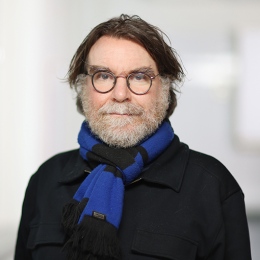
Karim Hamza is a Professor at Stockholm University's Department of Teaching and Learning. His work centers on developing empirically grounded didactic tools and collaborative methodologies like Didactic Developmental Dialogue (DDD) to enhance science education practices in upper-secondary and university settings. He leads the RiskEdu project (2018–2021), which focuses on risk assessment as a framework for improving scientific literacy, and collaborates with researchers from Uppsala University and Gothenburg University.
His research explores the interface between knowledge and values in socio-scientific issues (e.g., gene technology, radiation, biotechnology), emphasizing reflective practice, teacher identity, and interdisciplinary pedagogical approaches. Recent publications analyze student reasoning on nature of science, ethical dimensions of biotechnology, and models for teacher-researcher collaboration. The RiskEdu project, funded by the Swedish Institute for Educational Research and the Marcus and Amalia Wallenberg Foundation, highlights strategies for integrating risk assessment into science curricula through iterative design principles.
Karim supervises two PhD students:
- Matti Karlström (main supervisor) on reflective practice in university science teaching
- Maria Weiland (co-supervisor) on didactic models for early years science education
The department's research group focuses on teaching development in subject matter didactics, bridging classroom challenges with empirical research to produce actionable frameworks for educators.