معرفی
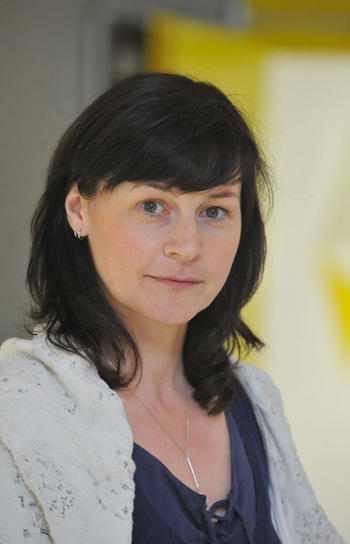
Dr. Julia Moeller is a Junior Professor of Educational Psychology with a focus on Development under Risk Conditions at the University of Leipzig, while also covering the Professorship for Educational-Psychological Diagnostics and Differential Psychology at the Faculty of Educational Sciences, University of Erfurt. Her work bridges educational psychology, developmental science, and methodological innovation in studying moment-to-moment processes in learning and development.
Dr. Moeller's research focuses on educational psychology and developmental processes with particular emphasis on how students experience motivation and emotions in learning situations. Her work employs innovative methodologies including the Experience Sampling Method (ESM) to capture in-the-moment dynamics of achievement motivation. She has developed the DYNAMICS Framework for studying moment-to-moment development in achievement motivation, which represents a significant contribution to person-oriented research in educational contexts.
Analysis of Dr. Moeller's recent publications reveals a strong focus on understanding the complex interplay between motivation, emotions, and learning outcomes in educational settings. Her work increasingly incorporates advanced statistical approaches including network analysis and causal inference methods to examine momentary processes. She has made substantial contributions to understanding student emotions during the COVID-19 pandemic and how boredom relates to creativity in educational contexts. Her research consistently emphasizes the importance of studying psychological processes as they unfold in real-time rather than relying solely on retrospective assessments.
Dr. Moeller has been actively involved in methodological advancements in psychological science, particularly advocating for within-person approaches that can capture individualized patterns of motivation and emotion. Her work on the DYNAMICS Framework represents an important step toward more nuanced understanding of how students' motivational experiences vary across different learning situations. She has contributed to practical guidance for implementing the Experience Sampling Method through her accepted paper 'So you want to do ESM? Ten Essential Topics for Implementing the Experience Sampling Method.'