معرفی
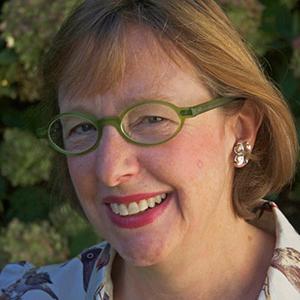
Julia Glass serves as Senior Distinguished Writer in Residence at Emerson College's Department of Writing, Literature and Publishing since 2016, teaching fiction writing from her office (Room 1218A, 180 Tremont Street, Boston). Her institutional affiliation centers on literary arts education within Emerson's academic framework.
Her academic foundation includes a B.A. from Yale College, establishing the groundwork for her literary career.
Glass's creative research explores the intricate intersections of family dynamics, grief, and identity formation through literary fiction. Her narratives dissect emotional landscapes across generational timelines, examining how memory shapes personal and collective consciousness. Works frequently incorporate Scottish cultural motifs and contemporary American social contexts, blending lyrical prose with psychological depth to investigate resilience amid loss. This thematic consistency demonstrates her commitment to humanistic storytelling as scholarly inquiry.
Her publications from 2002-2022 reveal evolving engagement with societal issues, progressing from intimate family sagas to climate-conscious narratives in Vigil Harbor. The trajectory shows increasing integration of environmental concerns with personal trauma, reflecting broader literary shifts toward ecological consciousness while maintaining core focus on relational complexity.
Major recognitions include:
- National Book Award for Three Junes
- Binghamton University John Gardner Award for Fiction (I See You Everywhere)
- Radcliffe Institute for Advanced Study Fellowship
- National Endowment for the Arts Fellowship
- New York Foundation for the Arts Fellowship
Through Twenty Summers—a Provincetown-based nonprofit arts incubator she co-founded—Glass extends mentorship beyond Emerson, fostering cross-disciplinary collaborations. Her NEA and NYFA fellowships provided critical research funding for novel development, while Radcliffe support enabled deep archival work. Though no formal doctoral students are documented, her classroom and Twenty Summers programs cultivate emerging writers through manuscript workshops and editorial guidance, emphasizing narrative craft as scholarly practice.
Her leadership at Twenty Summers creates structured residencies where writers engage with scientists and visual artists, generating hybrid projects that bridge literary fiction with climate science and social justice discourse—a direct extension of her Vigil Harbor thematic concerns.