معرفی
Juha Saarinen is an Assistant Professor of evolutionary paleontology and Academy Research Fellow at the Department of Geosciences and Geography, Faculty of Science, University of Helsinki. His research focuses on the functional traits of large herbivorous mammals across the last 66 million years, examining how dental and postcranial bone traits, body size, and diet reflect changes in climate and environments. As a Docent, he teaches courses in the Paleontology and Global Change master's programme and supervises Bachelor's, Master's, and PhD theses.
Dr. Saarinen's primary research interests include mammal ecomorphology, paleoecology, ecometrics, and the evolutionary history of proboscideans and other large herbivores. His work explores how functional traits in fossil mammal communities serve as indicators of past environmental conditions, particularly vegetation changes. He has developed expertise in mesowear analysis, body size evolution studies, and quantitative paleoenvironmental reconstruction methods.
His recent publications reveal a strong focus on ungulate evolution, dental ecometrics, and paleoenvironmental reconstruction across different geological periods and regions, from South America to Europe. His research often employs comparative approaches across continents and integrates fossil evidence with climate data to understand evolutionary responses to environmental change.
- Best PhD thesis in Geosciences (2015-2016)
- Academy Research Fellow position from Academy of Finland
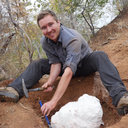
Dr. Saarinen serves as the body mass estimate data coordinator for the NOW database of fossil mammals and has supervised numerous graduate students. His current research projects include NEPA (Non-analogue ecosystems in the past) and studies on the behavioral and morphological adaptation of African Neogene to Quaternary Proboscidea. He has conducted extensive fieldwork and academic visits to institutions across Europe, Africa, and South America.