معرفی
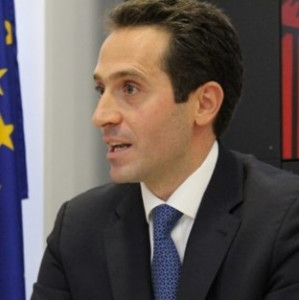
Ignacio Signes de Mesa serves as Visiting Professor in the European Legal Studies Department at the College of Europe (Bruges) while concurrently holding the position of legal secretary (référendaire) at the Court of Justice of the European Union since 2007. He also functions as Lead Instructor at the Florence School of Transnational Governance (European University Institute) and teaches EU law at Madrid's Universidad Carlos III and Universidad Pontificia Comillas–ICADE. His CJEU responsibilities encompass drafting Advocate General opinions and General Court judgments across diverse EU legal domains.
His academic foundation includes:
- LL.B. and Ph.D. from Universidad Complutense (Madrid)
- LL.M. from the College of Europe
- LL.M. from Harvard Law School
Signes de Mesa's research concentrates on the practical implementation of EU law with emphasis on competition enforcement mechanisms, state aid procedures, and the interplay between economic crises and regulatory frameworks. His scholarship bridges procedural law with substantive applications in international trade, intellectual property, and fundamental rights, reflecting deep institutional knowledge from his CJEU experience.
His publication trajectory demonstrates consistent specialization in EU procedural mechanics, evolving from foundational competition law texts (2013) through crisis-era policy analysis (2014) toward comprehensive procedural codification (2017, 2019) and culminating in the 2024 authoritative volume on European Procedural Law. This progression highlights increasing focus on judicial processes within EU institutions.
His academic recognition includes:
- Election as Académico correspondiente of the Spanish Royal Academy of Law and Jurisprudence (2016)
While active in editorial leadership (notably as editor of the 2024 European Procedural Law volume prefaced by CJEU President K. Lenaerts), the available documentation does not specify doctoral advisees or research grants. His practice-oriented scholarship suggests strong institutional engagement with EU legal frameworks rather than traditional laboratory-based research.