معرفی
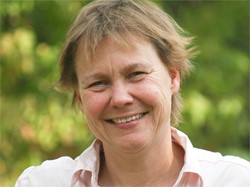
Joseph J Bailey is a Senior Lecturer in Ecology, Conservation and Sustainability at Anglia Ruskin University's Faculty of Science and Engineering, School of Life Sciences in Cambridge. He joined ARU in September 2022 after previously lecturing at York St John University (2018-2022) and completing his PhD and holding research and teaching positions at the University of Nottingham (2013-2018).
Dr. Bailey is a member of the Applied Ecology Research Group and holds fellowships with both the Higher Education Academy (FHEA) and the Royal Geographical Society (FRGS). He serves as Chair of the British Ecological Society's Macroecology Special Interest Group and is a member of the IUCN WCPA and its Specialist Group on Geoheritage. Additionally, he volunteers as a lead scientist for Operation Wallacea in Romania.
His research explores the relationship between biodiversity and geodiversity (surface and subsurface materials, landforms, and processes) to advance ecological theory, biodiversity modeling, and practical conservation. His work focuses on how geodiversity can play an explicit role in global conservation practice and policy, with recent contributions to measuring geodiversity consistently worldwide as part of the 'Essential Geodiversity Variables' team. He recently led a British Ecological Society policy report on 'Protected areas and nature recovery: Achieving the goal to protect 30% of UK land and seas for nature by 2030'.
Dr. Bailey's publications demonstrate a strong interdisciplinary approach, bridging ecology, geography, and conservation science. His recent work shows increasing emphasis on policy applications of geodiversity research, particularly regarding protected area management and international conservation targets.
- Fellow of the Higher Education Academy (FHEA)
- Fellow of the Royal Geographical Society (FRGS)
- Chair of BES Macroecology Special Interest Group
- Member of IUCN WCPA and Geoheritage Specialist Group
- Volunteer lead scientist for Operation Wallacea in Romania
As an educator, he serves as module director for Marine and Terrestrial Communities (Level 5) and Field Skills in Biology (Level 5), with additional contributions to the MSc Applied Wildlife Conservation program and a forensics module related to wildlife trade. His field research spans multiple geographic regions including the UK, Greenland, Romania, and Madagascar, with remote research on Finland and the Arctic.