معرفی
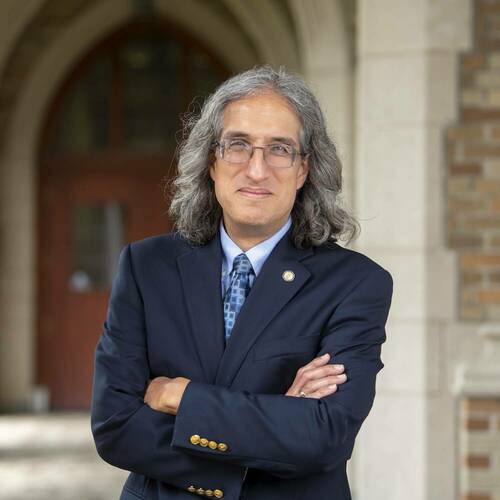
Jonathan Mayer serves as an Associate Professor at Princeton University with dual appointments in the Department of Computer Science and the School of Public and International Affairs. He also serves on the CITP (Center for Information Technology Policy) Steering Committee and maintains an active presence in technology policy discussions through speaking engagements and public service.
- Department of Computer Science, Princeton University
- School of Public and International Affairs, Princeton University
- CITP Steering Committee Member
Mayer holds a Ph.D. in Computer Science from Stanford University and a J.D. from Stanford Law School, making him uniquely qualified to bridge technical and legal domains in his research and public service.
His research focuses on the critical intersection of technology and law, with particular emphasis on national security, criminal procedure, consumer privacy, network management, and online speech. Mayer examines how technological systems interact with legal frameworks, often investigating surveillance practices, privacy protections, and the regulatory challenges posed by emerging technologies. His work combines technical analysis with legal scholarship to inform policy debates and shape regulatory approaches to complex digital issues.
Mayer's speaking engagements over the past decade reveal consistent themes in his research trajectory, particularly around privacy enforcement, platform accountability, and the legal implications of digital design choices. His recent work has increasingly focused on dark patterns, antitrust issues in digital markets, and the structural challenges of regulating technology platforms while preserving privacy and free expression.
Mayer has held significant public service roles including Chief Science and Technology Advisor and Chief AI Officer at the U.S. Department of Justice, technology advisor to U.S. Senator Kamala Harris, and Chief Technologist of the Federal Communications Commission Enforcement Bureau. These positions have allowed him to directly influence technology policy at the highest levels of government while maintaining his academic research agenda.