معرفی
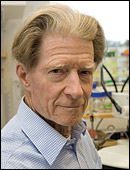
John Gurdon is a distinguished Professor and Nobel Laureate in Physiology or Medicine (2012) at the University of Cambridge. He is affiliated with the Department of Zoology and serves as a member of the Gurdon Institute, which he helped establish. His research focuses on nuclear reprogramming, developmental biology, and the mechanisms underlying cell fate determination. Gurdon holds honorary titles such as Knight Bachelor and has been recognized with prestigious awards, including the Copley Medal (2003) and the Wolf Prize (1989).
Education: Eton College (Classics), Christ Church, Oxford (Zoology), and a PhD with Michael Fischberg on nuclear transplantation in Xenopus. Postdoctoral work at Caltech explored bacteriophage genetics before transitioning to molecular biology in Cambridge. He held roles including Head of Cell Biology Division at the MRC Laboratory, John Humphrey Plummer Professorship, and Master of Magdalene College (1995–2002).
Research interests revolve around the totipotency of somatic cell nuclei, nuclear reprogramming efficiency, and mechanisms stabilizing cellular differentiation. His foundational work demonstrated that differentiated cells retain genetic totipotency, enabling the cloning of frogs from somatic nuclei. The Gurdon Institute, named in his honor, continues this legacy, advancing studies in developmental and cellular biology.
- Awards: Nobel Prize (2012), Lasker Award (2009), Royal Medal (1985).
- Key Contributions: Cloning via somatic cell nuclear transfer, elucidation of epigenetic reprogramming.