معرفی
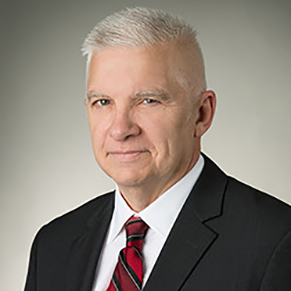
John E. Anderson serves as the Baird Family Professor of Economics in the Department of Economics at the University of Nebraska-Lincoln's College of Business. He concurrently directs the Central Plains Research Data Center (CPRDC), a federal statistical research data network node, and holds a Distinguished Scholar position at the Lincoln Institute of Land Policy in Cambridge, MA.
Education:
- Ph.D. in Economics, Claremont Graduate School
- B.A. in Mathematics and Economics, Western Michigan University
Dr. Anderson's research centers on public finance and tax policy with specialized focus on property taxation, urban economics, and transition economies. His work bridges theoretical frameworks with real-world policy applications, examining federal/state tax systems, housing markets, and fiscal reforms in post-Soviet states. He has extensively analyzed tax compliance behaviors, land use regulations, and the economic implications of property tax relief programs across diverse geopolitical contexts.
His publication portfolio reveals consistent thematic emphasis on property tax systems (40% of recent work), transition economy challenges (30%), and innovative tax policy applications (30%). Notable trends include increasing cross-national comparative studies since 2015 and growing integration of behavioral economics principles in tax compliance research.
Scientific Awards:
- Baird Family Professorship (2002, renewed 2007/2012/2017)
- 25-year service award (2016)
- Yeutter Institute Faculty Fellow (2019)
- Distinguished Scholar, Lincoln Institute of Land Policy
- Multiple 'Who's Who' listings and teaching awards including Economics Professor of the Year (1997)
Dr. Anderson has mentored numerous PhD candidates including Shafiun N. Shimul and Wenjing Li, with research funded by the National Science Foundation and U.S. Departments of State, Transportation, and Agriculture. His policy advisory work spans domestic state governments and international USAID projects across Eastern Europe and Asia.
He leads the CPRDC research infrastructure while maintaining active engagement with the Lincoln Institute of Land Policy, focusing on property tax reform initiatives and international fiscal policy development.