معرفی
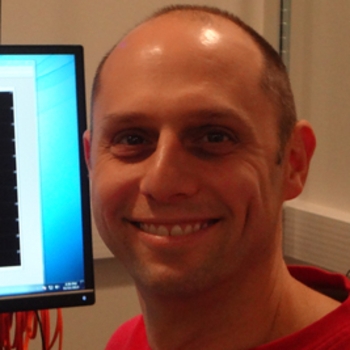
John A. Assad is a Professor of Neurobiology at Harvard Medical School's Department of Neurobiology, where he leads the Assad Laboratory. His research investigates how the brain integrates sensory inputs with internal states (e.g., attention, motivation) to control behavior. Previously using non-human primates, his lab now employs mice to leverage genetic tools, focusing on neuronal mechanisms of voluntary movement initiation—particularly self-timed actions relevant to disorders like Parkinson's disease.
Research Interests
Assad's work spans attention, decision-making, and motor control, with emphasis on cortical-basal ganglia circuits. Current projects examine dopamine's role in movement timing, striatal neuron functions, and optogenetic mapping of motor-initiation pathways. The lab combines electrophysiology, behavior analysis, optical imaging, and computational modeling.
Publications Overview
His 15 most recent publications (2003–2024) reveal consistent themes: dopamine dynamics in behavior, neural mechanisms of timing/decision-making, and advanced neuroengineering. Trends include increased focus on optogenetic tools (2022–2024) and dopamine-mediated motor control, reflecting his lab's shift toward mechanistic studies of voluntary action.
Laboratory
The Assad Laboratory employs multidisciplinary approaches to dissect motor initiation circuits. Active projects include: (1) Dopaminergic modulation of self-timed movements, (2) Striatal neuron subtypes in motor control, and (3) Optogenetic identification of movement-generating brain regions.