معرفی
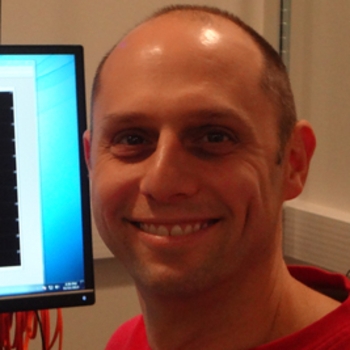
Daniel Leventhal, M.D., Ph.D., is an Assistant Professor in the Department of Neurology and Biomedical Engineering at the University of Michigan. His primary research focuses on the circuit-level physiology of movement disorders, including Parkinson’s disease, Huntington’s disease, dystonia, and tic disorders. His work investigates how striatal dopamine signaling contributes to motor learning and disease pathophysiology, with particular emphasis on neuroengineering approaches to understand and treat neurological disorders.
Research activities include developing mouse models of neurodevelopmental diseases, analyzing basal ganglia-thalamic interactions through electrophysiological recordings, and studying therapeutic interventions like deep brain stimulation (DBS). The Leventhal Lab emphasizes translational research, bridging basic neuroscience with clinical applications such as improving DBS outcomes for Parkinson’s patients.
Key contributions include elucidating dopamine’s role in motor control, discovering mechanisms underlying SUDEP (sudden unexpected death in epilepsy), and advancing methodologies for intraoperative functional brain mapping during surgeries. His work integrates electrophysiology, optogenetics, and behavioral analysis to dissect neural circuits involved in movement disorders.