معرفی
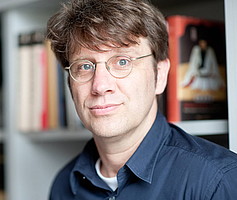
Prof. Joachim Kurtz is a Full Professor of Intellectual History at Heidelberg University’s Cluster of Excellence Asia and Europe in a Global Context since 2009. Previously, he held positions at Emory University (2003–2010) and the University of Erlangen-Nuremberg. He earned a Dr. phil. (summa cum laude) in Chinese Studies from Erlangen-Nuremberg (2003) and an M.A. in Chinese Studies, Political Sciences, and Philosophy from the Free University of Berlin (1997).
His research focuses on Late Imperial Chinese intellectual history, transcultural exchanges between Europe, China, and Japan, and translation studies. Notable works include The Discovery of Chinese Logic (2011) and co-edited volumes on conceptual history and transcultural frames. He has organized conferences such as “Standards of Validity in Late Imperial China” (2013) and “Reading the Signs: Languages of Prognostication in Chinese History” (2013).
Awarded grants include the HERA-funded “East Asian Uses of the European Past” (2016–2019) and DFG grants for projects on global concept histories. He is a Corresponding Member of the Hamburg Academy of Sciences (since 2015) and active in the Association for Asian Studies and European Association of Chinese Studies.
His work bridges historical and transcultural studies, emphasizing knowledge circulation and conceptual transformation. Major contributions include analyzing Jesuit paratexts, Liang Qichao’s translation of Fichte, and the formation of modern Chinese academic disciplines.