معرفی
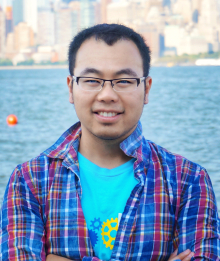
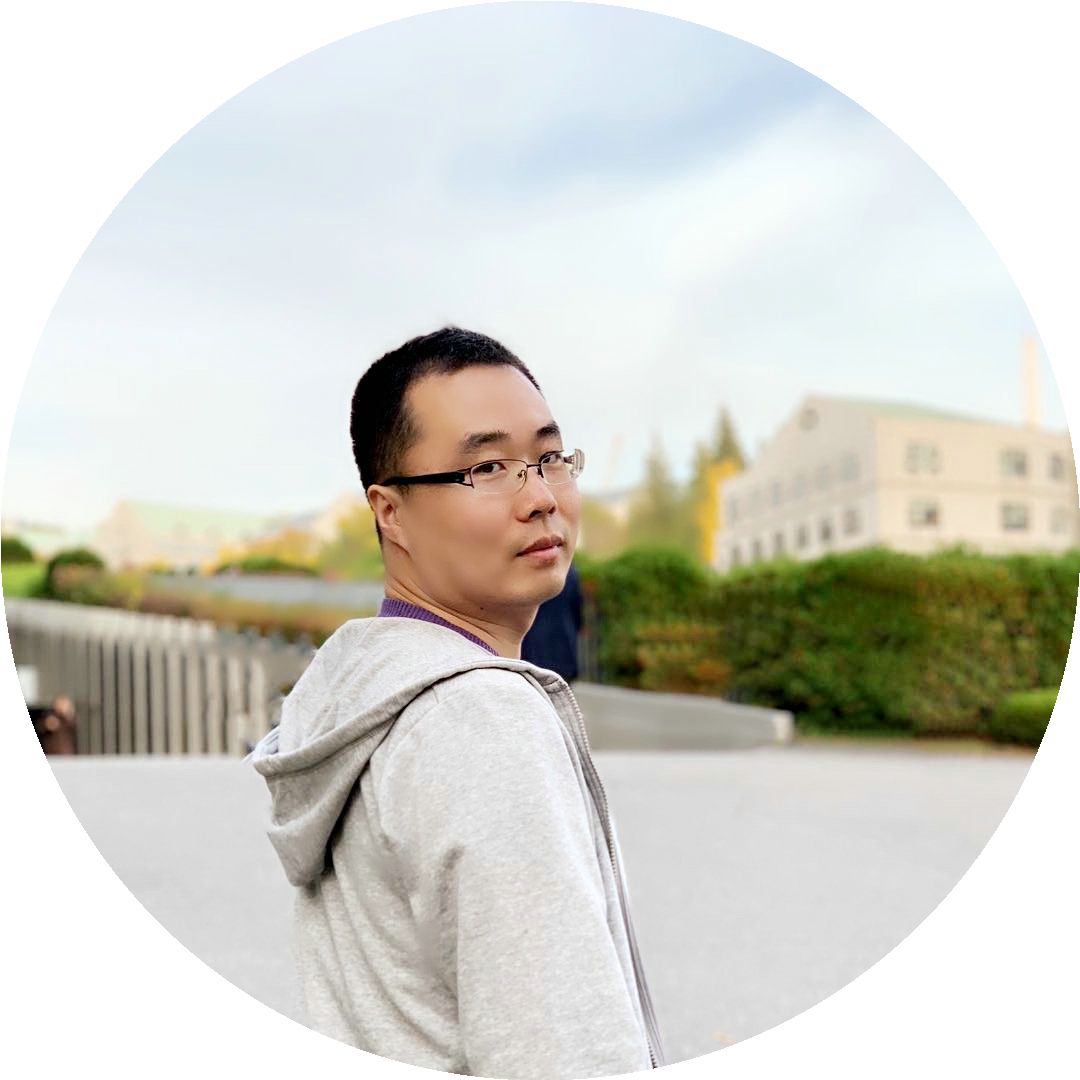
Jindong Wang is a Tenure-Track Assistant Professor in the Department of Data Science at William & Mary. He is also a faculty member of the AI Safety Community at the Future of Life Institute. Previously, he was a Senior Researcher at Microsoft Research Asia from 2019 to 2024. His work spans robust, trustworthy, and responsible AI, with a focus on foundation models, transfer learning, and AI for social sciences.
- PhD, University of Chinese Academy of Sciences (2019)
- Bachelor’s, North China University of Technology (2014)
Dr. Wang’s research centers on enhancing the reliability and societal impact of AI systems. Key areas include robust machine learning, domain generalization, federated learning, semi-supervised learning, and large language model evaluation and enhancement. He is particularly interested in the philosophical and behavioral aspects of LLMs and how AI can be leveraged in interdisciplinary domains such as social sciences. His work aims to build AI systems that are not only high-performing but also safe, interpretable, and aligned with human values.
His recent publications (2021–2025) in top venues like TPAMI, NeurIPS, ICML, ICLR, and ACL reflect a strong trend toward understanding and improving foundation models—especially in noisy or out-of-distribution settings—and developing frameworks for dynamic evaluation, agent behavior, and trustworthy AI. These works often combine theoretical rigor with practical open-source implementations, demonstrating a commitment to reproducibility and community impact.
- World’s Top 2% Highly Cited Scientists (Stanford, since 2022)
- Most Influential AI Scholar (AMiner, since 2022)
- Best Paper Award, AAAI 2025 Good Data Workshop
- William & Mary Faculty Research Award (2025)
- Top 17 Most Cited NeurIPS Papers (2021)
- PaperDigest Most Influential CIKM Paper (2021)
- Most Cited Paper in ICDM 2017 and 2nd Most Cited in MM 2018
Dr. Wang actively mentors PhD and master’s students and welcomes internship applications for future cohorts. He has secured significant research visibility and impact, with over 20,000 citations (H-index 50) and leadership roles as associate editor of IEEE TNNLS, guest editor for ACM TIST, and area chair for ICML, NeurIPS, ICLR, KDD, and ACL. He has delivered tutorials at major conferences including IJCAI, WSDM, KDD, AAAI, and CVPR. His research is supported by collaborations with leading institutions and industry partners, and has been featured in Forbes and MIT Technology Review.
He leads several influential open-source projects, including transferlearning, PromptBench, torchSSL, and USB, which together have received over 20,000 GitHub stars. These tools support research in transfer learning, prompt engineering, semi-supervised learning, and unified self-supervised benchmarks. He is also organizing key workshops such as FedGenAI-IJCAI’25 and the ICCV 2025 workshop on Trustworthy Study Transfers, fostering community engagement in emerging AI challenges.