معرفی
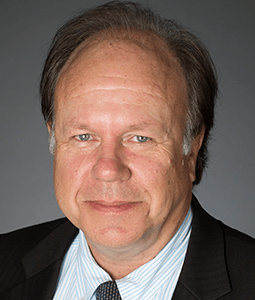
Jim Smith is Professor of Environmental Science at the University of Portsmouth, affiliated with the Faculty of Science & Health and the School of the Environment, Geography and Geosciences. His research focuses on the environmental consequences of radioactive pollutants, particularly from the Chernobyl and Fukushima nuclear accidents, combining modeling with field studies on ecosystem recovery and radiation impacts on wildlife.
Education:
- BSc (Hons) in Astrophysics, University of Edinburgh
- MSc in Soil and Water Engineering, Cranfield University
- PhD in Applied Mathematics, University of Liverpool
His research interests include pollution modeling in terrestrial and aquatic systems, radioecology, and long-term environmental recovery post-nuclear accidents. He has led major international projects, including studying wildlife recovery in the Chernobyl Exclusion Zone and developing the ATOMIK vodka initiative to support local communities. His work has attracted extensive media coverage from BBC, CNN, and Washington Post.
Recent publications highlight trends in radiological risk assessment, wildlife health under chronic radiation exposure, and groundwater contamination dynamics. His research combines environmental science with public engagement and policy-relevant outcomes, contributing to sustainable development in contaminated regions.
Scientific Engagement:
- Member, International Atomic Energy Agency (2009–present)
- Member, Food and Agriculture Organization of the United Nations (2011)
- Invited speaker at major conferences on Chernobyl and radioecology
Smith supervises PhD students in radiation and environmental science and leads multiple research projects funded by NERC and Diamond Light Source. He also contributes to public communication efforts in Ukraine, supporting stakeholder engagement and community well-being in radioactively contaminated areas. His work is supported by datasets on fish health, dust dispersion, and crustacean radiation effects.
Labs and Research Teams: He leads research teams focused on environmental radioactivity and collaborates with institutions in Belarus, Japan, the U.S., and Ukraine. His work integrates field monitoring, laboratory analysis (e.g., using SAXS at Diamond Light Source), and modeling to assess ecosystem health and recovery.