معرفی
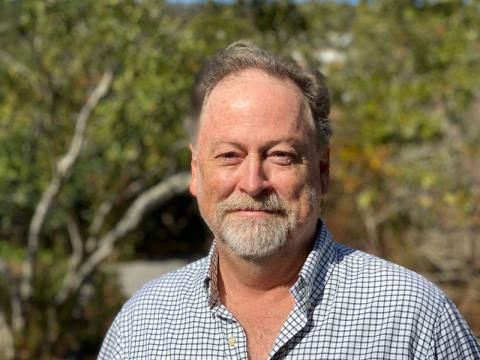
Jiaze Wang is an Assistant Professor in the School of Earth and Climate Sciences at the University of Maine, where he conducts interdisciplinary research at the intersection of geology, oceanography, and climate science. His work focuses on understanding Earth system responses to climate change through integrated approaches combining field observations, laboratory experiments, and advanced numerical modeling.
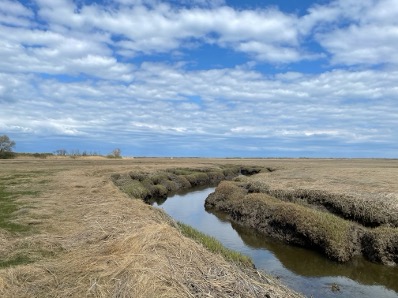
Research Interests: Dr. Wang's research spans multiple dimensions of coastal and marine systems, with emphasis on biogeochemical cycles in water and sediment, sediment dynamics, coastal morphological evolution, and deltaic systems. He investigates how rising sea levels alter freshwater-saltwater interactions and influence greenhouse gas emissions from coastal wetlands. His work also includes paleo-environmental reconstructions and the development of process-based models such as the Genome-based EmergeNt Ocean Microbial Ecosystem Model (GENOME) to simulate microbial controls on nutrient and carbon cycling.
His methodological toolkit includes sensor-based field monitoring, wet-lab experimentation, and high-resolution numerical simulations. Although no recent publications are listed in the provided text, his ongoing projects suggest strong engagement in climate-driven coastal system modeling, carbon flux estimation, and ecosystem response prediction under global change scenarios.
- Scientific Awards: No personal awards are mentioned in the provided text.
Advising and Grants: Dr. Wang advises graduate students in the School of Earth and Climate Sciences, with recent successes including Rachael’s thesis defense and Anna Johnston’s receipt of the 2025 Maine Wetlands Research Award for her work on tidal marsh pond dynamics. While specific grant funding is not listed, his active research group and modeling efforts imply external support. The lab is currently not recruiting new graduate students for 2025.
Labs and Research Groups: Dr. Wang leads a research group based in Room 114 of the Bryand Global Science Center at the University of Maine. The team explores biological-geological interactions in coastal systems, focusing on carbon sequestration and biogeochemical dynamics under changing climatic conditions using both observational and modeling approaches.