معرفی
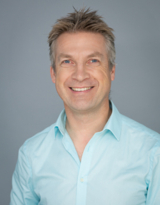
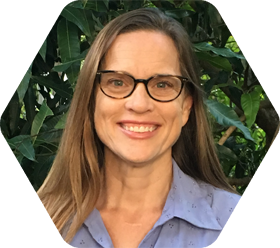
Havalend Steinmuller serves as Assistant Professor at the Louisiana Universities Marine Consortium (LUMCON), leading the Coastal Biogeochemistry Lab with research focused on coastal wetland responses to climate change stressors including sea-level rise, saltwater intrusion, and extreme events. Their work bridges biogeochemical processes and geomorphological dynamics in critical blue carbon ecosystems.
Education:
- PhD in Conservation Biology, University of Central Florida, 2019
- MS in Oceanography and Coastal Sciences, Louisiana State University, 2015
- BS in Coastal Environmental Science, Louisiana State University, 2013
Research centers on biogeochemical cycling in transitional coastal zones, particularly examining carbon stability in mangrove-marsh ecotones, surface elevation dynamics under disturbance regimes, and nutrient cycling alterations during mangrove range expansion. This work provides critical insights for coastal management under accelerating climate change, with emphasis on quantifying 'blue carbon' storage potential and ecosystem vulnerability thresholds.
Publication analysis (2019-2024) reveals consistent focus on methodological refinement in coastal biogeochemistry, particularly loss-on-ignition applications for soil analysis, carbon burial rate modeling across geomorphic settings, and ecotone biogeochemical tipping points. The portfolio demonstrates strong integration of field measurements with global synthesis efforts, establishing foundational metrics for wetland carbon accounting.
Scientific Awards:
No awards are documented in the provided information.
Dr. Steinmuller currently advises MS student Cameron Donofrio on nutrient cycling impacts in collaboration with Grand Bay National Estuarine Research Reserve. Active projects include poleward mangrove expansion studies, geomorphology-mediated ecosystem function analysis, and blue carbon storage quantification - indicating sustained research funding though specific grants aren't detailed. The lab maintains strong ties with national estuarine research networks.
The Coastal Biogeochemistry Lab operates as a hub for interdisciplinary coastal research, combining field-intensive data collection across Gulf of Mexico sites with laboratory analyses to address pressing questions in wetland resilience. Current work emphasizes practical applications for coastal management through robust quantification of biogeochemical processes in rapidly changing ecosystems.