معرفی
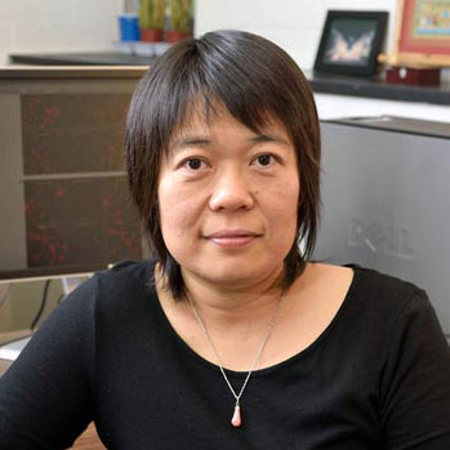
Jianping Hu is a Professor of Plant Biology at Michigan State University and a faculty member of the MSU-DOE Plant Research Laboratory. She serves as the Director of the Molecular Plant Sciences Program and is also affiliated with the Genetics & Genome Sciences Program and the Cell & Molecular Biology Program. Her research focuses on molecular mechanisms of plant energy organelles and their role in stress response. Dr. Hu's laboratory investigates the dynamic behavior of plant mitochondria, peroxisomes, and chloroplasts, which are essential for energy capture, conversion, and metabolism in plants.
Dr. Hu received her B.S. from Peking University in Beijing, China, followed by a Ph.D. from the University of Georgia in Athens, GA. She completed her postdoctoral research at the Howard Hughes Medical Institute, Salk Institute for Biological Studies in La Jolla, CA.
Dr. Hu's research centers on understanding the molecular mechanisms underlying the dynamic behavior of plant energy organelles and their role in plant interaction with the environment. Her lab investigates how peroxisomes and mitochondria proliferate, divide, move, and distribute, and how these processes contribute to plant robustness and stress response. Current research focuses on organelle motility along the cytoskeleton in the context of photosynthesis, photorespiration, and stress response, as well as the regulation of photorespiration in dynamic environmental conditions and its role in plant defense against pathogens. Through genetic suppressor screening, her lab has identified regulators and non-canonical pathways that modulate photorespiration under dynamic light conditions. Her work has significant agricultural relevance, potentially providing molecular bases for engineering crop plants to improve metabolism, bioenergy production, and defense against environmental stresses.
Analysis of Dr. Hu's recent publications reveals a strong focus on peroxisome biology, photorespiration, and organelle dynamics in plants. Her research spans multiple model systems including Arabidopsis and rice, with applications in understanding plant stress responses, immunity, and metabolic engineering. Recent work has expanded into the biosynthesis of plant defense compounds like salicylic acid, and the development of computational tools like DeepLearnMOR for organelle morphology classification. Her collaborative approach is evident in the numerous multi-author publications across various high-impact journals including Nature, Cell, and Plant Cell.
Dr. Hu leads the Hu laboratory, which employs a multidisciplinary approach combining genetics, molecular biology, biochemistry, cell biology, and computational methods to study plant organelle dynamics. The lab has established a deep-learning framework (DeepLearnMOR) to rapidly classify organelle morphology, facilitating large-scale screens for mutants in organelle dynamics. Current research directions include revealing mechanisms for organelle motility along the cytoskeleton and investigating the regulation of photorespiration in dynamic environmental conditions and its role in plant defense against pathogens.