معرفی
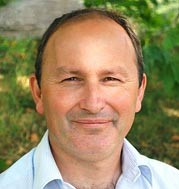
Dr. Jessie Woodbridge is a Lecturer in Ecosystem Resilience within the School of Geography, Earth and Environmental Sciences at the University of Plymouth. She serves as Programme Lead and admissions tutor for the MSc/MRes Sustainable Environmental Management and MSc Environmental Consultancy programmes, while also teaching across undergraduate courses in Environmental Science, Environmental Management and Sustainability, and Geography.
Her research focuses on long-term environmental changes, particularly examining how human activity has influenced landscapes over millennia in relation to modern environmental challenges including biodiversity change, wildfire, and drought. She specializes in palaeoecological techniques, utilizing data from peat and lake sediments to reconstruct Holocene environmental changes through interdisciplinary approaches that integrate long-term environmental perspectives with contemporary issues.
Dr. Woodbridge's recent publications reveal strong trends in integrating deep-time ecological data with modern environmental challenges, with particular emphasis on Mediterranean and European landscapes, pollen analysis, and human-environment interactions. Her work spans multiple disciplines including environmental science, archaeology, and climate science, often employing interdisciplinary methods to address complex socio-ecological issues.
She has secured funding from prestigious organizations including the GCRF, British Academy, NERC, Royal Geographical Society, and Association for Environmental Archaeology for her research projects. As Programme Lead, she oversees curriculum development and student admissions for postgraduate programs focused on sustainability and environmental management.
Dr. Woodbridge actively collaborates on international research initiatives, currently serving as a collaborator on the European Research Council funded COREX project and as a member of the PaleOpen COST Action, which aims to integrate long-term environmental data globally to support environmental challenge responses through open science practices.