معرفی
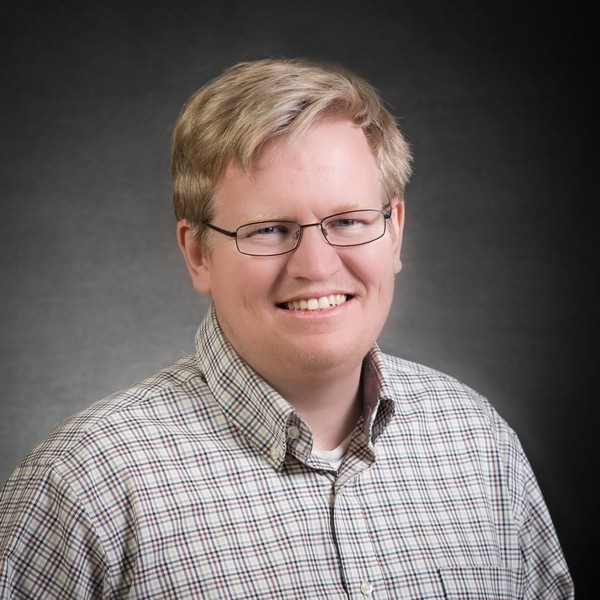
Jeffrey Comer is an Associate Professor of Physiology and Molecular Biophysics in the Department of Anatomy & Physiology at Kansas State University's College of Veterinary Medicine. His research focuses on applying computational methods to solve biomedical problems, particularly in cancer treatment and nanotechnology applications.
Dr. Comer's research interests span computational biophysics, molecular dynamics simulations, and nanotechnology applications in medicine. His work centers on designing therapeutic peptides for cancer immunotherapy and creating peptides that fold and self-assemble at nanomaterial-water interfaces. He uses computational approaches to understand how nanocarriers interact with anti-cancer drugs and biological components like blood proteins and cell membranes, helping to identify the most promising candidates for experimental testing.
His recent publications reveal a strong focus on interdisciplinary research bridging computational chemistry, cancer biology, and nanotechnology. The publications demonstrate expertise in molecular dynamics simulations applied to diverse problems including cancer immunotherapy, peptide design, membrane permeability, and nanomaterial-biological interactions. His work shows consistent collaboration with experimental groups to validate computational findings.
Dr. Comer advises graduate students in the Anatomy & Physiology program, including international collaborations such as with Lina María Preciado from Universidad de Antioquia in Colombia. His research group develops computational methods for studying molecular interactions and has created tools like DiffusionFusion for calculating position-dependent diffusivity from molecular dynamics trajectories.
The Comer Research Group maintains an active presence in the scientific community through publications in high-impact journals and presentations at major conferences including the Biophysical Society Meeting and the American Chemical Society Regional Meeting. His group's work demonstrates strong interdisciplinary collaboration across physics, chemistry, biology, and veterinary medicine.