معرفی
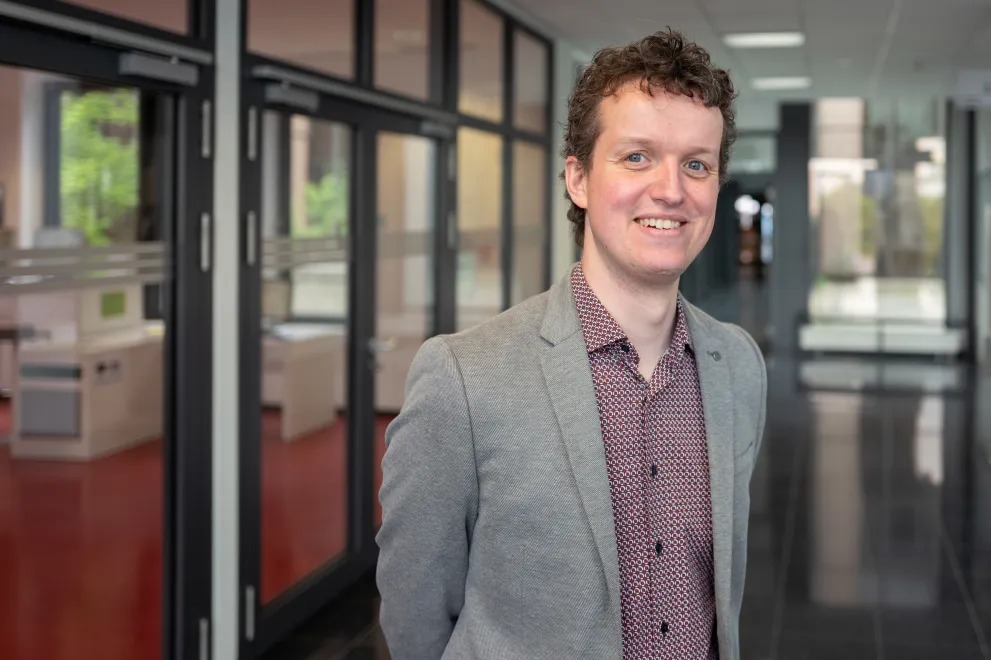
Jan De Graaf serves as a Junior Professor of European History at the Institute for Social Movements within the House of History of the Ruhr Area at Ruhr University Bochum. He leads an independent research group examining social cohesion and mobility in post-war Europe through an East-West comparative framework, funded by prestigious awards including the Sofja Kovalevskaja Award.
De Graaf earned his MA in History from Utrecht University (2009) and completed his PhD at the University of Portsmouth (2015) with research on comparative socialist party reconstruction across Czechoslovakia, France, Italy, and Poland after 1945. Prior to his current position, he held a postdoctoral fellowship at KU Leuven studying wildcat strikes as a pan-European phenomenon between 1945-1953.
His groundbreaking research reconceptualizes post-war European history by transcending the traditional East-West scholarly divide, identifying significant parallels across communist and capitalist societies while examining social conflict, democratic development, and societal consensus mechanisms. De Graaf's work challenges persistent Cold War frameworks in historical scholarship through comparative analysis of social structures and movements.
His major recognitions include:
- Sofja Kovalevskaja Award of the Alexander von Humboldt Stiftung (2019)
- Research Foundation – Flanders (FWO) postdoctoral fellowship
With Humboldt Award funding, De Graaf established an independent research group at Ruhr-Universität Bochum that examines social cohesion and mobility patterns across post-war Europe. While specific doctoral students aren't named in available materials, his Junior Professor position involves graduate supervision and teaching responsibilities within Ruhr University Bochum's academic framework.
Based at the interdisciplinary Institute for Social Movements, De Graaf's research program operates within the House of History of the Ruhr Area—a central scientific institution housing specialized collections of approximately 450,000 media items and serving as a hub for Ruhr region historical research and social movement studies.