معرفی
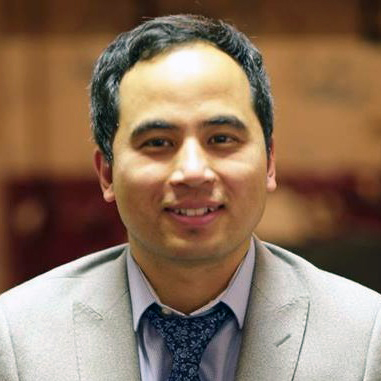
Professor James Sullivan is a distinguished academic in the Faculty of Science and Engineering at Swansea University, specializing in Materials Science and Engineering. As a Professor and co-director of the Materials Academy, he leads significant research initiatives focused on materials corrosion and protection. His work bridges academic research with industrial applications through partnerships with major organizations including Tata Steel, BASF, European Space Agency, The Royal Mint, and NSG Pilkington.
Professor Sullivan's research centers on the relationship between microstructure and corrosion behavior of materials, with particular expertise in zinc alloys for galvanic protection. He pioneered a novel time-lapse imaging technique that visualizes corrosion mechanisms and preferential phase attack of microstructures in-situ under electrolyte films. His work has been presented at prestigious venues including the Gordon Research Conference on aqueous corrosion and published in leading journals such as Corrosion Science. His research spans fundamental studies of corrosion mechanisms to practical applications in industrial settings.
Professor Sullivan's extensive publication record demonstrates consistent contributions to materials science, particularly in corrosion mechanisms, protective coatings, and microstructure analysis. His recent work (2023-2025) focuses on Zn-Mg-Al coatings, additive manufacturing materials, and novel testing methodologies. The research shows increasing interdisciplinary collaboration, connecting traditional corrosion science with emerging fields like additive manufacturing and sustainable materials development.
As co-director of the Materials Academy, Professor Sullivan has secured over £15 million in grant funding over the past four years. He leads the EPSRC COATED2 Centre for doctoral training, which trains 40 new doctoral researchers. His grant portfolio includes significant projects like COATED 2015 (£6.3 million), COATED 2013 (£3.5 million), METaL 2012 (£1.4 million), STRIP 2012 (£6.6 million), SPECIFIC 2011 (£10 million), and Materials Live 2012 (£140,000). He actively supervises numerous PhD, EngD, and MSc students working on cutting-edge materials research projects.