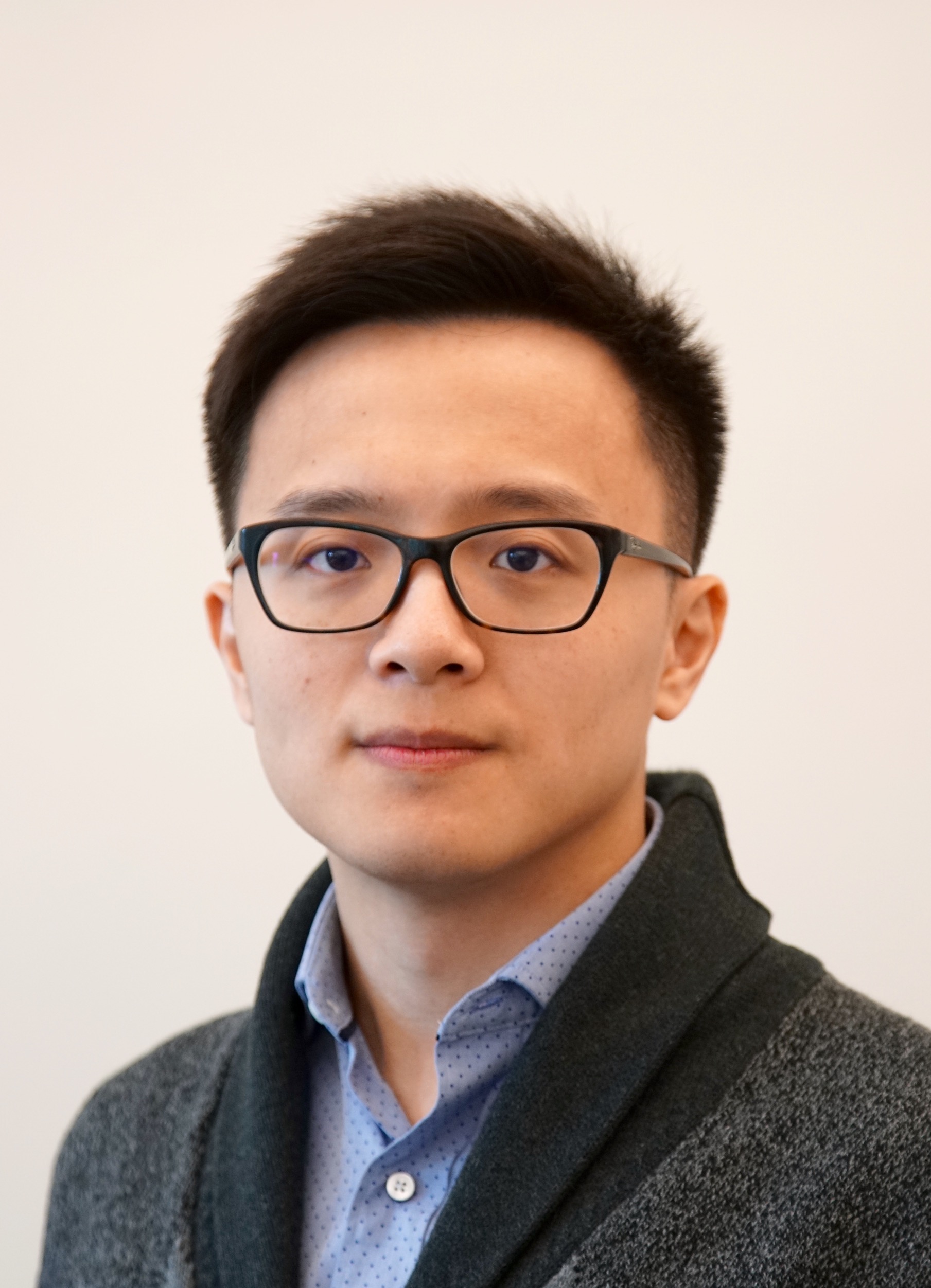
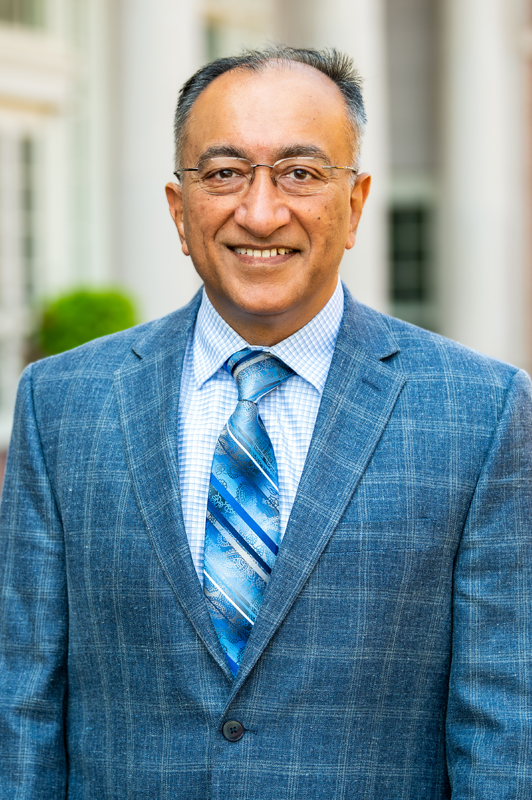
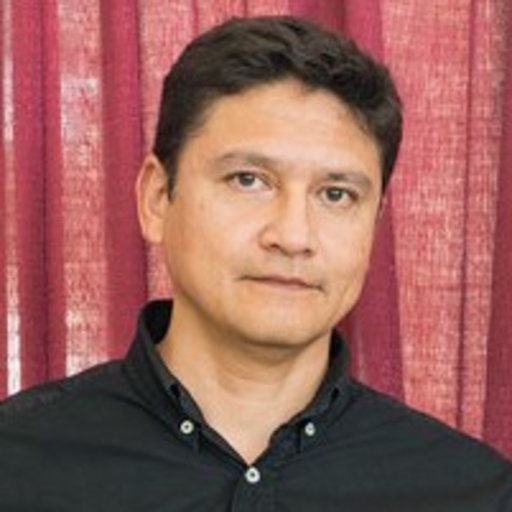
Roy Johnsen is a Professor in the Department of Mechanical and Industrial Engineering at the Norwegian University of Science and Technology (NTNU), specializing in corrosion and surface technology. With a Dr.ing. degree from NTH (1984), he has extensive industry experience from Statoil Research Centre (1985-1991) and CorrOcean (1991-2004), where he expanded the company globally. His current research focuses on hydrogen embrittlement, corrosion protection, and integrity management in offshore systems, with collaborations across Europe, Asia, and the Americas.
Dr. Min Sun is an Associate Professor and Director of the Undergraduate Program in the Department of Civil Engineering at the University of Victoria (UVic). He holds a PhD from the University of Toronto. His research focuses on structural engineering and steel structures, particularly in the areas of steel connections, seismic resilience, and numerical modeling. Dr. Sun has extensive academic and professional experience, including roles as Assistant Professor at UVic (2016–2022), Lecturer at the University of Toronto, and structural design roles in industry. His research interests emphasize the performance of steel structures under extreme loads, including earthquake engineering and material behavior. Recent work includes studies on stress concentration factors in steel connections, thermal integrity of piles, and wood-frame building reliability under lateral loads. He actively contributes to professional organizations, such as serving as Vice President (Western Region) for the Canadian Society for Civil Engineering (2018–2020). Dr. Sun teaches courses including Advanced Structural Analysis (CIVE 421) and Solid Mechanics (CIVE 220) at UVic. He currently supervises graduate students in structural steel design and construction. His publications span experimental and numerical analyses, with a focus on improving design standards for steel and wood structures. Labs/Teams: Affiliated with UVic's Engineering and Computer Science faculty and the IESVIC (Institute for Energy Systems and Sustainability at UVic), though specific lab names are not explicitly stated in the text.
Professor James Sullivan is a corrosion science expert at the Faculty of Science and Engineering, Swansea University , specializing in zinc alloys for galvanic protection. He developed an in-situ time-lapse imaging technique to visualize corrosion mechanisms, presented at the Gordon Research Conference in 2012. As co-director of the Materials Academy , he secured £15M in grants to train industry professionals and researchers, collaborating with Tata Steel, European Space Agency, and The Royal Mint. Research Focus: Microstructure-corrosion relationships in metallic coatings Key Projects: Novel zinc alloy coatings, additive manufacturing corrosion performance His recent publications analyze Zn-Mg-Al and Zn-Mg-Ca systems , antimony/germanium alloying effects, and additive manufacturing material optimization. Supervision includes PhD/EngD students working on galvanic coatings, high-entropy alloys, and sustainable materials. Teaching: Modules like Materials Degradation and Protection and Interpersonal Skills for Engineers .
Pradeep Lall is the MacFarlane Endowed Distinguished Professor and Alumni Professor in the Department of Mechanical Engineering at Auburn University’s Samuel Ginn College of Engineering. He serves as Director of the Auburn University Electronics Packaging Research Institute (EPRI) and holds a joint courtesy appointment in the Department of Electrical and Computer Engineering. A leader in flexible hybrid electronics and harsh environment systems, Dr. Lall has built a world-renowned research program focused on additive manufacturing, electronics reliability, and sustainable materials. Ph.D. in Mechanical Engineering, University of Maryland M.B.A. in Finance and Strategy, Northwestern University M.S. in Mechanical Engineering, University of Maryland B.E. in Mechanical Engineering, Delhi College of Engineering Dr. Lall’s research centers on Flexible Hybrid Electronics (FHE) , Harsh Environment Electronics , Semiconductor Packaging , and Prognostics Health Management . His work leverages additive manufacturing techniques such as Aerosol-Jet, InkJet, and screen printing to develop conformal, robust, and sustainable electronic systems. His innovations include the Flexible Biometric Band for monitoring workers in hazardous environments and additively printed antennas for aerospace applications. His recent focus includes eliminating PFAS from electronics and developing water-based inks for eco-friendly manufacturing. The 15 most recent publications reflect a strong trend toward sustainability , additive manufacturing , and real-world applications in defense, aerospace, automotive, and healthcare. His work bridges fundamental research with industrial realization, particularly through partnerships with NextFlex and federal agencies. Themes include reliability under shock and vibration, sensor development for extreme environments, and workforce training in advanced manufacturing. Dr. Lall has received numerous scientific honors, including: SMTA Founder’s Award (2024) SEMI FlexTech R&D Achievements Award (2023) ASME Avram Bar-Cohen Memorial Medal (2022) IEEE Biedenbach Outstanding Engineering Educator Award (2020) IEEE Sustained Technical Contributions Award (2018) NSF Alex Schwarzkopf Prize (2016) Fellow of ASME, IEEE, NextFlex, and Alabama Academy of Science Dr. Lall has secured over $2 million in annual research funding from SRC, NSF, and NextFlex, leading large-scale projects on sustainable electronics and workforce development. He mentors numerous graduate and undergraduate students and leads the NSF-CAVE3 Center. As founding faculty advisor of the SMTA student chapter, he promotes student engagement in electronics manufacturing. His lab, EPRI, features a full prototyping line for additive electronics and collaborates with industry and government to advance domestic manufacturing capabilities. EPRI, under Dr. Lall’s leadership, partners with the Auburn University Research and Technology Park, the Office of Economic Development, and multiple colleges to drive technology commercialization and workforce education in electronic packaging. The institute is at the forefront of the national effort to reestablish U.S. leadership in semiconductor packaging and advanced electronics manufacturing.
Dr. Luis Cisneros-Zevallos is a Professor in the Department of Horticultural Sciences at Texas A&M University's College of Agriculture & Life Sciences. He earned his B.S.E. in Food Industries Engineering from National Agrarian University - La Molina (Peru), followed by M.S. and Ph.D. degrees in Food Science from University of California, Davis. His research focuses on postharvest technology, food safety, and nanotechnology applications in agriculture. Research interests include developing nanoencapsulation techniques for antimicrobial agents, creating superhydrophobic coatings to prevent bacterial contamination, and enhancing produce shelf-life through nanotechnology. His work integrates phytochemical analysis with food engineering solutions to reduce agricultural waste and improve food safety from harvest to consumption. Dr. Cisneros-Zevallos has made significant contributions in understanding pathogen behavior in fresh produce, developing edible nanocoatings, and advancing integrated pest management strategies. His recent work explores synergistic combinations of essential oils and plasma technologies for food sanitization.
Jose Miguel Espi Huerta is an Associate Professor in the Department of Electronic Engineering at the School of Engineering, University of Valencia. He is an active researcher in power electronics and control systems, contributing significantly to grid-connected converters, renewable energy integration, and digital control techniques. His research interests include: Power Electronics and Inverter Control Predictive and Robust Control Strategies Renewable Energy Systems (Photovoltaic and Wind) Induction Heating Technologies Remote and Web-Based Educational Labs The analysis of his recent publications reveals a strong focus on improving the efficiency and reliability of grid-connected power converters using advanced control methods such as predictive current control and MPPT strategies. His work spans both industrial applications and academic education, particularly in developing remote laboratory platforms for control systems. Scientific awards and honors: No awards listed in the provided text. He has supervised academic theses and is affiliated with the LEII (Laboratory of Industrial Electronics and Instrumentation) research group. While no formal grants are listed, his extensive publication record indicates sustained research activity. He has contributed to the development of educational tools such as air levitation systems accessible via PLC and web interfaces, promoting innovative teaching methods in engineering education. The LEII research group focuses on industrial electronics, instrumentation, and power systems, providing a collaborative environment for applied research in energy conversion and control technologies.
Prof. Markus Valtiner is a Professor at TU Wien's Department of Applied Interface Physics, focusing on interfacial processes, corrosion science, and electrochemistry. His research combines experimental and theoretical approaches to study solid-liquid interfaces, surface chemistry, and material degradation mechanisms. He leads a team investigating high entropy alloys, passive film structures, and biomimetic membrane systems. Education: Dipl.-Ing. (Diplom-Ingenieur) in Engineering, Dr.techn. (Doctor of Engineering) from TU Wien. Research Interests: Corrosion mechanisms, electrochemical analysis, surface modification, and thin film characterization. His work spans applications in automotive materials, protective coatings, and biomedical systems. Recent Trends: Articles emphasize real-time visualization of ion dynamics, advanced surface analysis via LEIS and AFM, and sustainable material treatments. Studies on hydration layers and superlubrication highlight innovative solutions for friction reduction in confined spaces. Awards: None explicitly mentioned. Advising & Grants: Advised 19 thesis students (2018–2023) on topics like electrochemical functionalization, corrosion protection, and nanophotonic materials. Grant activities focus on interdisciplinary collaborations between physics, chemistry, and engineering. Labs & Teams: Leads the Network Lab at TU Wien, specializing in interfacial physics and advanced materials characterization using cutting-edge microscopy and spectroscopy techniques.
Dr. Kingsley Lau is an Associate Professor in the Department of Civil and Environmental Engineering at Florida International University (FIU). He joined FIU in 2012 after serving as a Corrosion Research Scientist at the Florida Department of Transportation (FDOT). He holds a Ph.D. in Civil Engineering from the University of South Florida (2010). His research focuses on infrastructure materials durability, specifically corrosion of engineering materials and durability of reinforced and prestressed concrete. Dr. Lau has authored/co-authored over 15 peer-reviewed manuscripts and conference papers, with recent work emphasizing coastal infrastructure resilience, corrosion monitoring systems, and microbiologically influenced corrosion (MIC). Dr. Lau’s research integrates advanced electrochemical testing, machine learning models for predictive coating analysis, and novel materials development. He has collaborated on critical projects such as the Port of Miami Tunnel corrosion monitoring system and corrosion mitigation strategies for Florida’s marine bridges. His work addresses challenges posed by rising sea levels, aggressive marine environments, and deficient post-tension grout in infrastructure systems. Key areas of expertise include: corrosion mechanisms in alkaline solutions, sulfate-induced steel corrosion, and durability assessment of UHPC (ultra-high-performance concrete) in accelerated bridge construction. His contributions bridge laboratory studies with field applications, aiming to enhance infrastructure longevity and safety in corrosive environments.
Paolo Pescetto is a Fixed-term tenure-track Assistant Professor in the Department of Energy (DENERG) at Politecnico di Torino, where he is also a member of the Interdepartmental Center PEIC (Power Electronics Innovation Center). He serves on multiple academic boards including the College of Electrical and Energy Engineering, College of Computer, Film and Mechatronics Engineering, and College of Mechanical, Aerospace, and Automotive Engineering. His research focuses on power electronics, electrical machines, and motor drives with particular emphasis on electric vehicle applications. His work spans motor control strategies, thermal management of high-power density motors, sensorless control techniques, and integrated power systems for e-mobility. He has developed advanced methodologies for flux mapping, torque ripple compensation, and fault protection in permanent magnet and synchronous reluctance machines. Analysis of his recent publications reveals a strong trend toward solving practical challenges in electric vehicle powertrains, with significant contributions in multi-phase motor drives, thermal management, and fault-tolerant control systems. His work bridges theoretical advances with practical automotive applications, particularly in third-generation electric vehicle technologies. Dr. Pescetto holds multiple patents in motor control technologies, including methods for MTPA tracking without HF injection, spatial harmonic flux-map identification, and isolated on-board battery chargers for electric vehicles. His intellectual property demonstrates practical innovation in the field of motor drives and power electronics. He actively supervises PhD students Andrei Bojoi and Chen Chen in the Electrical, Electronics, and Communications Engineering program, focusing on electric motor drives and sustainable traction electrification. His research projects include commercial contracts on sensorless control of synchronous reluctance machines, firmware implementation for motor control, and advanced sensorless control methodologies for brushless motors. As a member of the PEEMD Research Group within DENERG, Dr. Pescetto contributes to cutting-edge research in power electronics and motor drives, with a strong industry collaboration focus that translates academic research into practical automotive solutions.
Dr. Cui Lin is an Assistant Professor in the Department of Process Engineering at Memorial University’s Faculty of Engineering and Applied Science. She holds dual PhDs in Materials Science and Mineral Resource Engineering from University of Science and Technology Beijing and Dalhousie University, respectively. Her expertise spans mining geomechanics, rock stress estimation, corrosion control in mineral industries, and sustainable mineral extraction. She is an active member of professional organizations including the Canadian Institute of Mining (CIM) and the International Society for Rock Mechanics (ISRM). Education: B.Eng. in Chemical Engineering, University of Science and Technology Beijing M.Eng. in Materials Processing Engineering, University of Science and Technology Beijing PhD in Materials Science and Engineering, University of Science and Technology Beijing PhD in Mineral Resource Engineering, Dalhousie University Dr. Lin’s research focuses on optimizing mine design through advanced numerical modelling, improving underground stress estimation techniques, and mitigating corrosion in mineral processing. Her work emphasizes sustainability in resource extraction and environmental protection. Recent contributions include methodologies for 3D in-situ stress estimation and corrosion control technologies. Awards: CARMA Best Paper Award in Rock Mechanics (2024) She maintains strong ties to industry and academia, supervising graduate students in mining, geotechnical, and materials engineering. Open positions exist for M.Eng and PhD candidates specializing in rock mechanics and numerical modelling.
Alda Simões is an Associate Professor in the Department of Chemical Engineering at Instituto Superior Técnico (University of Lisbon). Her research focuses on corrosion protection of metallic materials, electrochemical methods for corrosion study, and development of organic coatings. She teaches courses including Electrochemistry and Energy, Transfer Phenomena I, and Transport Phenomena. Affiliations: Department of Chemical Engineering, Higher Technical Institute Research Interests: Electrochemical corrosion analysis, advanced protective coatings, redox cells for energy storage, surface modification techniques Current research projects involve studying advanced organic redox cells for electricity storage, naphthenic acid effects on steel corrosion using spectroscopic methods, and development of superhydrophobic coatings for aluminum alloys. Her work integrates electrochemical characterization with material performance evaluation under corrosive environments.
Erkki Levänen is a Professor specializing in Materials Science and Environmental Engineering. He holds a Doctor of Engineering in Materials Engineering (Rock Engineering, 2004) and a Tech. ul. in Mechanical Engineering (1994). His research focuses on advanced materials processing, including ceramic additive manufacturing, supercritical fluid applications, and corrosion science. He contributes to UN Sustainable Development Goals related to clean energy and sustainable innovation. Key research interests include: 1) Supercritical CO₂ processing for material synthesis (e.g., nanoparticles, ceramics), 2) Development of 3D-printed ceramic structures using vat photopolymerization, 3) Corrosion mechanisms of metallic coatings in extreme environments, and 4) Valorization of industrial waste into sustainable materials. His work bridges fundamental material science with industrial applications. Levänen has authored over 186 publications and actively participates in academic peer review (e.g., Cement and Concrete Composites, Chemical Engineering Journal) and doctoral thesis evaluations. His research networks span international collaborations, evidenced by co-authored studies with institutions globally. Recent projects include the MAGNEX initiative for CO₂ mineralization in circular economies and studies on antibacterial ceramic coatings. Education: Doctor of Engineering, Materials Engineering, Rock Engineering (2004) Tech. ul., Mechanical Engineering (1994) Grants & Projects: Includes funding for ceramic additive manufacturing, CO₂ utilization, and corrosion studies. Labs/Teams: Involved in additive manufacturing and materials processing research groups.
Robert Kelly is a Professor of Materials Science and Engineering at the University of Virginia, leading the Kelly Research Group within the College of Engineering. His research focuses on localized corrosion mechanisms, electrochemical processes, and corrosion modeling in materials such as stainless steel and aluminum alloys. Key projects include understanding corrosion in aging aircraft components, predicting corrosion damage in nuclear fuel storage canisters, and developing embeddable corrosion microinstruments. He collaborates with sponsors like the Department of Energy and the Office of Naval Research. His work integrates experimental and computational methods, including finite element modeling (FEM) and confocal laser microscopy, to study galvanic coupling, thin film electrolytes, and corrosion prevention. Notable contributions include advancements in atmospheric corrosion testing protocols and the application of microfabrication techniques. Kelly has advised multiple graduate students and authored a textbook on electrochemical techniques in corrosion science. Recent studies address corrosion challenges in additive manufacturing (e.g., selective laser melted stainless steel) and the efficacy of sacrificial coatings for aluminum alloys. His research also explores the role of environmental factors like humidity, chloride ions, and oxidizing agents in accelerating corrosion processes.
Mats Meeusen is a postdoctoral researcher at Vrije Universiteit Brussel , specializing in Corrosion Science and Materials Engineering . He is affiliated with the Sustainable Materials Engineering department under the Materials and Chemistry research group. His research focuses on corrosion inhibition , electrochemical impedance spectroscopy , and finite element modeling of organic coatings. He has extensively studied lithium-based inhibitors , active protective coatings , and spatiotemporal water uptake in materials. Meeusen has contributed to 15 peer-reviewed publications with a focus on predictive modeling, electrochemical evaluation, and hybrid interfacial bonding. His work bridges experimental validation and computational analysis to understand corrosion mechanisms.
PD Dr. Michael Rohwerder is a Research Professor and Group Leader at the Max Planck Institute for Sustainable Materials in Düsseldorf, leading the Department of Interface Chemistry and Surface Engineering. His research focuses on corrosion mechanisms, advanced coatings, hydrogen embrittlement, and materials science. He holds a diploma in physics from the University of Hamburg (1992) and a PhD from the University of Düsseldorf (1997). After postdoctoral work at the University of Texas at Austin, he joined the University of Erlangen and later the Max Planck Institute, where he coordinates the Department since 2014. His work includes developing self-healing coatings, cryogenically processed alloys, and novel Kelvin probe techniques for corrosion analysis. He received the Christian Doppler Laboratory Award (2008) and declined a Full Professorship at Ohio State University due to a counter-offer. Education: Physics Diploma (1992), University of Hamburg PhD in Physics (1997), University of Düsseldorf Research Interests: Corrosion science and delamination Smart coatings and self-healing materials Hydrogen diffusion and embrittlement High-temperature oxidation and alloy design Awards: Christian Doppler Laboratory Award (2008) Grants/Labs: Scientific coordination of the Department of Interface Chemistry and Surface Engineering Development of the Scanning Flow Cell (SFC) and advanced Kelvin probe techniques