معرفی
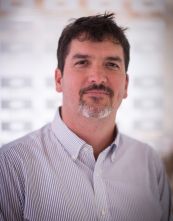
James Fraser is a Professor and Chair of the Department of Bioengineering and Therapeutic Sciences at the University of California San Francisco (UCSF) School of Pharmacy. He coordinates the school’s research efforts, focusing on collaborations across labs, departments, and institutions. His research centers on protein structure and conformational dynamics, particularly how mutations and ligand binding reshape protein ensembles to affect function and organismal fitness. He employs advanced computational and biophysical techniques such as X-ray crystallography, cryo-EM, and directed evolution to study these processes.
- UCSF School of Pharmacy
- Department of Bioengineering and Therapeutic Sciences
- Graduate Programs: Chemistry and Chemical Biology, Biophysics, Pharmaceutical Sciences and Pharmacogenomics
- Affiliations: Quantitative Biosciences Institute (QBI), Bowes Biomedical Investigator Program
Fraser’s research combines structural biology, systems pharmacology, and computational modeling to address fundamental questions in protein function and evolution. His lab develops methods to extract maximal information from X-ray diffraction and cryo-EM data, enabling detailed analysis of protein conformational states. Recent work includes studying SARS-CoV-2 proteins for antiviral drug discovery and investigating resistance mechanisms in the MET receptor tyrosine kinase.
His 15 most recent articles span structural biology, computational enzymology, and drug development, with a focus on SARS-CoV-2 and MET inhibitors. Keywords include Protein Dynamics, X-ray Crystallography, Cryo-EM, and Directed Evolution, reflecting his interdisciplinary approach.
- W.H. and W.L. Bragg Prize (2020), International Union of Crystallography
- Byers Award in Basic Science (2020), UCSF
- Packard Fellow (2014-2019), David and Lucille Packard Foundation
- Searle Scholar (2014-2017), Kinship Foundation
- Pew Scholar in the Biomedical Sciences (2014-2016), Pew Charitable Trusts
Fraser mentors students and postdoctoral scholars, including Stephanie Wankowicz, Galen Correy, and Gabriella Estevam, who co-author his publications. His lab collaborates with institutions like the Weizmann Institute and QBI, integrating computational approaches with experimental validation. He advocates for open science and reproducibility, contributing to preprint peer review initiatives.