معرفی
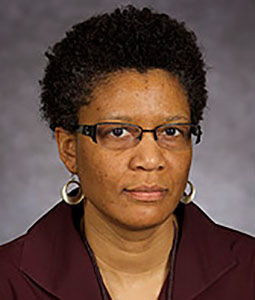
James Darkwa is a senior professor and leading researcher in catalysis and organometallic chemistry, whose primary institutional affiliation from 2006 to 2023 has been the University of Johannesburg. He has additionally held research roles at the Botswana Institute for Technology Research and Innovation, the Southern African Institute of Welding, the University of the Western Cape, the University of Cape Town, the University of Limpopo, the University of Botswana, Newcastle University, Northern State University (Aberdeen), and several others, reflecting a broad trans-national research footprint.
His research interests centre on the design, synthesis and mechanistic understanding of metal complexes for catalytic hydrogenation and related transformations, with a growing emphasis on sustainable energy applications such as CO₂ fixation and biodiesel upgrading. Specific themes include:
- Pyrazolyl-based ligand architectures for Zn(II), Pd(II) and Ni(II) centres.
- Ring-opening polymerization of cyclic esters to biodegradable polyesters.
- Methoxycarbonylation and carbonylation of alkenes using tailored Pd(II) pre-catalysts.
- Ethylene polymerization catalysis and olefin activation.
Across more than four decades, Darkwa’s work has appeared in high-impact journals such as Journal of the American Chemical Society, Polyhedron, Journal of Organometallic Chemistry, and Acta Crystallographica, reflecting sustained contributions to synthetic methodology, structural elucidation, and catalytic mechanism. The temporal breadth of his publications (1988–2022) shows an evolution from fundamental cluster chemistry to contemporary green-chemistry challenges.
Although specific awards are not enumerated in the supplied text, Darkwa has been successful in attracting funding from the National Research Foundation (South Africa), NSF (USA), National Natural Science Foundation of China, Seventh Framework Programme (EU), and other national and international sponsors, attesting to his recognised scientific stature.
His collaborative network spans more than 70 institutional affiliations worldwide, with a co-authorship cluster centred in Botswana and extending globally. No named doctoral or master’s students are provided in the text, nor are laboratory or team details explicitly stated.

.jpg)