معرفی
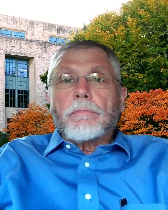
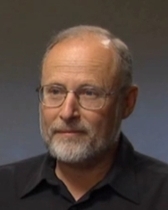
James Avery Sauls is a Professor and the Hearne Chair of Theoretical Physics at Louisiana State University (LSU), affiliated with the Department of Physics & Astronomy in the College of Science. His research focuses on quantum fluids and solids, unconventional superconductors, and topological phases of matter. He has been a leader in advancing theoretical frameworks for superfluid 3He and chiral superconductors, with contributions to understanding symmetry breaking, collective modes, and transport phenomena in these systems.
Education:
- Ph.D. in Physics, State University of New York (SUNY) Stony Brook, 1980
Research Interests: Dr. Sauls specializes in superfluidity and superconductivity under extreme conditions. His work addresses confinement effects in superfluid 3He, topological defects in quantum matter, and applications of superconducting materials in advanced technologies like quantum computing and particle accelerators. He explores chiral phases, stripe phases, and the interplay between disorder and superconducting properties, often linking experimental observations to theoretical models.
Awards & Honors:
- Fellow, American Physical Society
- Max Planck Research Prize (1994)
- John Bardeen Prize (2012)
- Fritz London Prize (2017)
Advising and Grants: While no students are explicitly listed, Sauls has advised postdoctoral researchers and graduate students through his roles at LSU and the Hearne Institute. His research has been supported by grants from the National Science Foundation, Department of Energy, and other institutions. Notable initiatives include leading projects at the Center for Applied Physics and Superconducting Technologies (CAPST) and contributing to the Superconducting Quantum Materials and Systems (SQMS) research center.
Labs & Research Teams: Sauls is a core member of the Hearne Institute of Theoretical Physics, where he collaborates on quantum fluid dynamics and superconductivity. He also engages with interdisciplinary teams at CAPST and SQMS, focusing on optimizing superconducting materials and mitigating decoherence in quantum hardware.