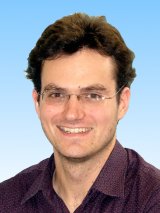
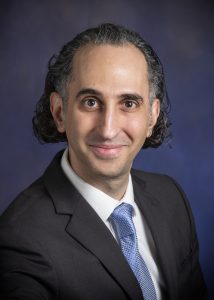
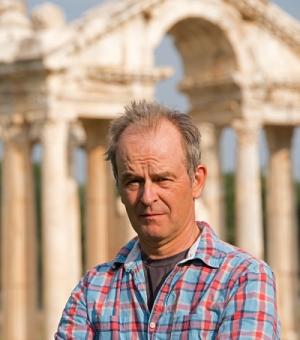
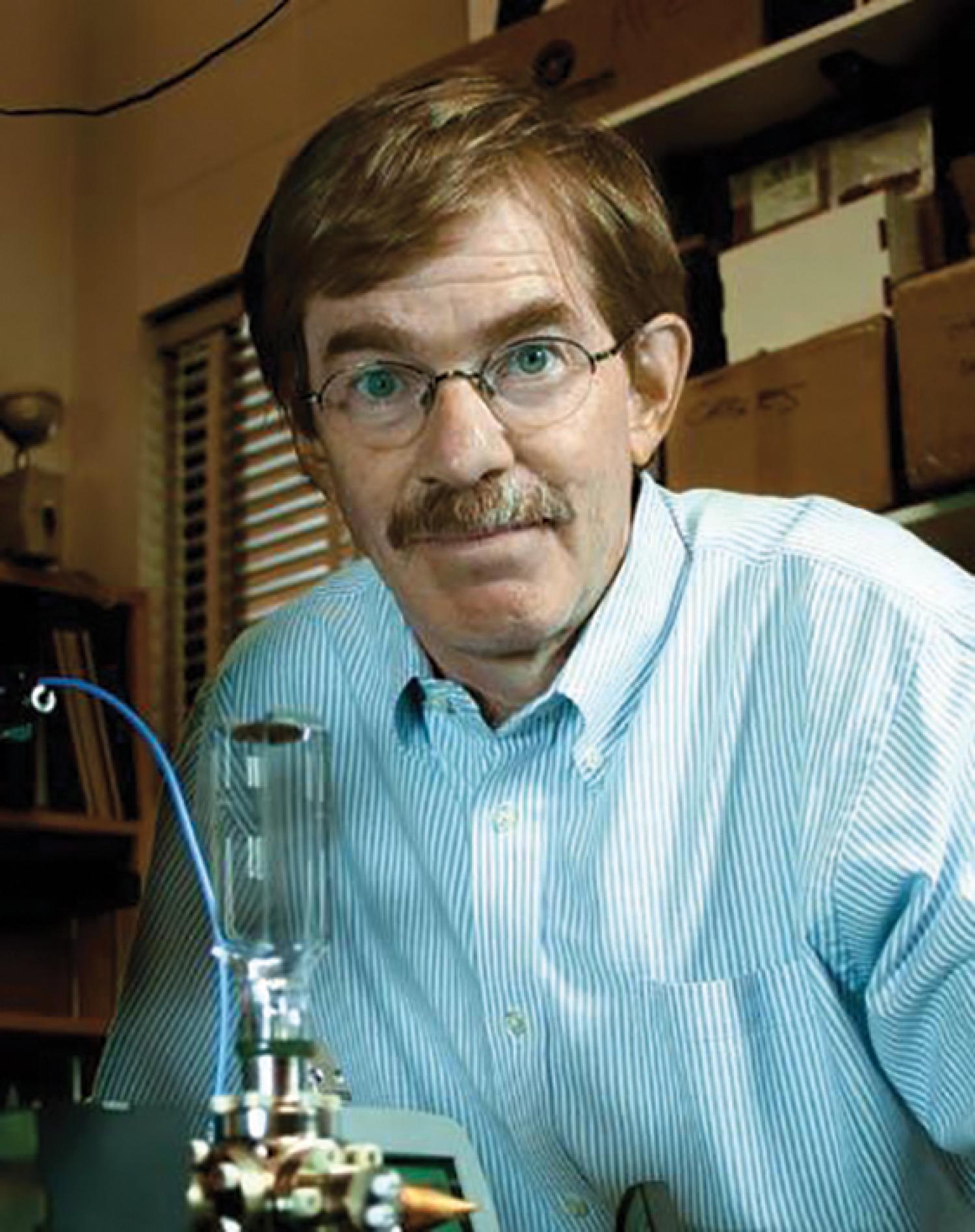
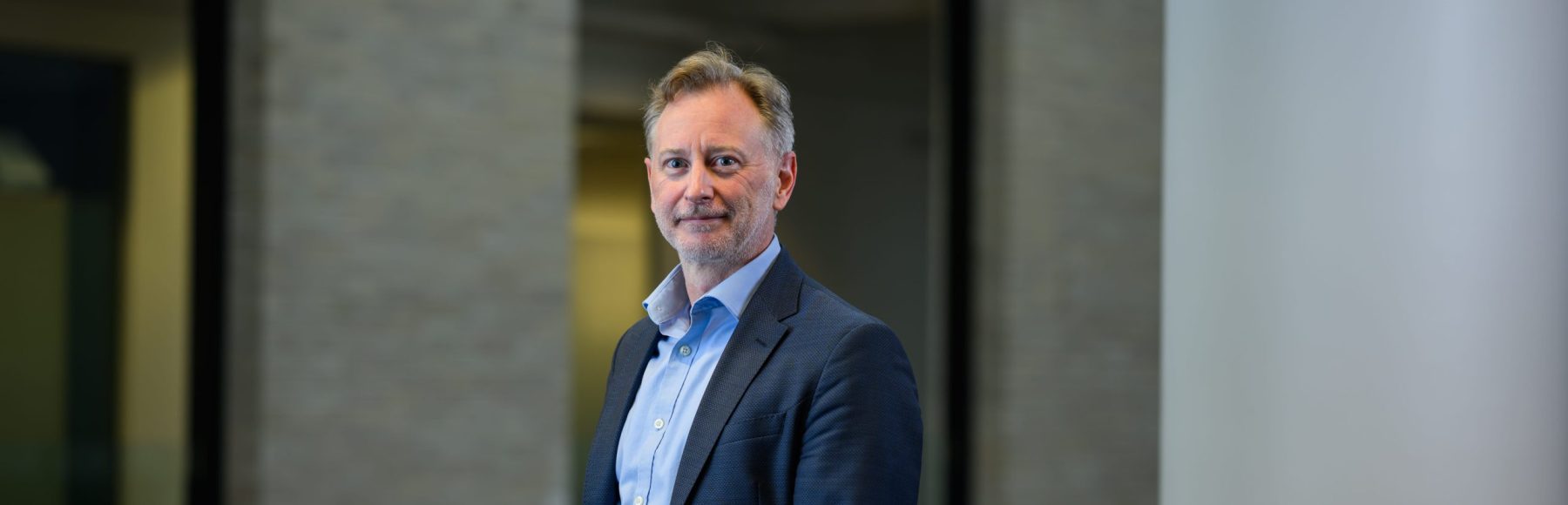
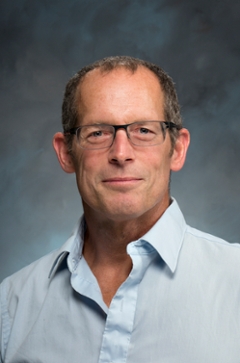
Grégoire Ithier is a Senior Lecturer in Physics at the Department of Physics, Royal Holloway, University of London. His research focuses on quantum engineering, decoherence, thermalization, mesoscopic physics, and random matrix theory. He leads the 'TypDyn' project exploring typical dynamics of embedded quantum systems, and co-leads the Leverhulme Trust-funded 'Generation and detection of quantum signals' initiative. His work bridges theoretical and experimental domains, including superconducting circuits and cryogenic microwave engineering. Ithier's research tools include advanced numerical methods (e.g., exact diagonalization) and statistical techniques (e.g., random matrix theory). Key Projects: TypDyn: Studies typical dynamics in embedded quantum systems (2015–present) QSimFP: Quantum simulators for fundamental physics (2020–2024) A new statistical theory of disordered quantum systems (2020–2024) His experimental work involves superconducting qubits, Josephson devices, and nano-superfluidic cavities. Grants include STFC and Leverhulme Trust funding. Recent publications address quantum thermalization, many-body systems, and random Hamiltonian analysis.
Jean-Philippe Brantut is an Associate Professor at École Polytechnique Fédérale de Lausanne (EPFL), affiliated with the School of Basic Sciences (SB), the Institute of Physics (IPHYS), and the School of Physics (SPH-ENS). He leads the Laboratory for Quantum Gases (LQG), a research group focused on quantum simulation with ultracold atomic systems. He also serves as a PhD program committee member for the Doctoral Program in Physics at EPFL. Research Interests: His work lies at the intersection of quantum optics, atomic physics, and condensed matter physics. He investigates strongly correlated fermionic systems, cavity quantum electrodynamics, mesoscopic physics, and quantum transport. His group pioneers the integration of Fermi gases with high-finesse optical cavities to simulate quantum devices and explore novel quantum matter. Recent Research Trends: His recent publications, appearing in Nature , Science , and Nature Physics , demonstrate a strong focus on engineering quantum many-body systems using photon-mediated interactions. Key themes include the realization of random spin models, observation of density-wave ordering, and the investigation of universal pair polaritons in strongly interacting Fermi gases. His earlier work laid foundations in quantum thermoelectricity and quantized transport in neutral matter. Scientific Awards: Latsis University Prize (2023) Physics Teaching Award at EPFL (2023) ERC Consolidator Grant (2022): Driven and Dissipative Quantum Simulators ERC Starting Grant (2016): Devices, engines and circuits: quantum engineering with cold atoms Fondation Sandoz Chair (2016) SNSF Ambizione Fellowship (2013) Advising and Grants: Brantut actively supervises multiple PhD students, including current students Gaia Bolognini, Tabea Bühler, Ekaterina Fedotova, Francesca Orsi, and Zeyang Xue, and has advised several successful graduates such as Victor Helson, Kevin Roux, Nick Sauerwein, and Timo Zwettler. His research is supported by major grants, most notably two European Research Council (ERC) grants, underscoring the significance and innovation of his work in quantum simulation and quantum engineering. Laboratories and Teams: He leads the Laboratory for Quantum Gases (LQG) at EPFL, which operates two main experimental setups: the Fermi gas experiment and the microscope experiment. The team includes post-doctoral researchers, PhD students, and visiting scientists, fostering a collaborative environment for advancing quantum science with ultracold atoms.
John Davis is a Professor in the Department of Physics at the University of Alberta, Faculty of Science. He holds a PhD and MSc from Northwestern University and a Bachelor’s from Washington University. His research focuses on nanomechanics, superfluidity, and superconductivity, particularly in confined geometries and quantum properties of nanomechanical systems. His lab develops superfluid-based technologies for dark matter detection and precision measurement. He has held academic positions since 2010, including roles at the Canadian Institute for Advanced Research and postdoctoral training at the University of Alberta with Prof. Mark R. Freeman. Education: PhD in Physics (2008), Northwestern University MSc in Physics (2003), Northwestern University Bachelor’s in Physics with Honors (2001), Washington University Research Interests: Superfluid nanomechanical resonators Ultralow-temperature superfluid 3He Nanofluidic cavity quantum electrodynamics Quantum-limited torque magnetometry Applications in dark matter detection and gravitational wave sensing His recent work emphasizes magnomechanics and optomechanical transduction , integrating superfluid systems with quantum sensors. Articles highlight advancements in cryogenic devices, nonlinear dynamics, and hybrid quantum systems. Ongoing projects include the HElium-based Light Operated Superfluid (HELIOS) dark matter detector. Grants & Labs: His lab operates a cryogen-efficient low-temperature facility, focusing on microfluidic quantum fluid experiments. Collaborations involve advanced photonic crystal cavities and diamond-based optomechanical platforms.
Professor Brian Leeds DeMarco is a leading academic in the Department of Physics at the University of Illinois Urbana-Champaign (UIUC), serving as the IQUIST Director and Bardeen Faculty Scholar. He specializes in Atomic, Molecular, and Optical Physics, with a focus on quantum simulation using ultracold atoms in optical lattices to address problems in condensed matter physics. His research has led to groundbreaking discoveries, including the first quantum-degenerate Fermi gas and three-dimensional Anderson localization of matter, earning him prestigious awards like the NSF CAREER Award and Sloan Fellowship. DeMarco holds a B.A. in Physics from SUNY Geneseo (1996) and a Ph.D. from the University of Colorado Boulder (2001). His postdoctoral work at NIST with David Wineland advanced quantum computing with trapped ions. At UIUC since 2003, he has held roles such as Associate Head for Undergraduate Programs and currently chairs NASA's Fundamental Physical Sciences Standing Review Board. His research explores quantum simulation, quantum computing architectures, and ultracold matter. Notable achievements include identifying phase-slip crossover in optical lattices and pioneering 3D Anderson localization. He has published over 30 high-impact articles, with recent work focusing on quantum simulators and hybrid quantum systems. Awards: APS Fellow, University of Illinois Scholar, NASA Review Board Chair, Defense Sciences Study Group member. Grants: NSF, ONR, Sloan Foundation support for quantum simulation and ultracold atom research. DeMarco leads the DeMarco Group, advancing quantum technologies and training students in experimental physics. His lab’s work on quantum testbeds and trapped ion processors positions him at the forefront of quantum information science.
Ian Spielman is an Adjunct Professor at the University of Maryland, affiliated with the National Institute of Standards and Technology (NIST) and the Joint Quantum Institute (JQI). His research focuses on ultracold atomic systems, quantum gases, and many-body physics. Spielman leads experiments exploring artificial gauge fields, spin-dependent forces, and long-range interactions in systems like RbK, RbChip, and RbLi. Collaborating with Dr. Justyna Zwolak, he applies machine learning to quantum experiments for control and analysis. His work bridges theoretical concepts with experimental innovation, addressing phenomena from superfluid turbulence to geometrical frustration in quantum systems. Education details are not explicitly provided in the text. Spielman oversees postdoctoral training programs, including the JQI Experimental Postdoc Program and NIST NRC Postdoc Program. Notable achievements include mentoring students like Dr. Mingshu Zhao (recognized for turbulence research) and Dario D’Amato (winner of the 'Most Outstanding Poster in Physics' in 2025). His experimental group, part of NIST’s Laser Cooling and Trapping team, investigates dynamical structure factors, coherence in lattice fermions, and solitary wave phenomena in spin-orbit-coupled Bose-Einstein condensates. Spielman’s contributions span both foundational quantum science and interdisciplinary applications, emphasizing the interplay between measurement techniques and conceptual breakthroughs.
David Schuster is an Associate Professor of Physics at the University of Chicago. His primary research focuses on experimental condensed matter physics, with a particular emphasis on circuit quantum electrodynamics (cQED), superconducting qubits, and quantum information science. He leads the Schuster Lab, which explores quantum systems, hybrid quantum technologies, and topological materials. Education: Ph.D. in Physics from Yale University (2007), advised by Robert Schoelkopf. His doctoral work pioneered advancements in circuit QED, demonstrating strong coupling between superconducting qubits and microwave resonators. Research Interests: The lab investigates superconducting quantum circuits, topological photonics, quantum sensors for dark matter, and scalable quantum computing architectures. Projects include developing fluxonium qubits, autonomous error correction, and hybrid systems involving trapped electrons on helium. Key Contributions: Published in Nature , Science , and Physical Review Letters on topics like topological circuits, photon blockade, and dark matter detection using superconducting cavities. Collaborates with groups at Stanford, Purdue, and other institutions on quantum technologies. Students and Collaborators: Advises numerous graduate and undergraduate students, including prominent alumni who have transitioned to postdocs and industry roles. Lab members present at major conferences like the APS March Meeting. Labs: Schuster Lab at the University of Chicago, with access to state-of-the-art facilities like the Pritzker NanoFabrication Facility. Collaborates with the Awschalom, Cleland, and Houck groups on hybrid quantum systems and materials science.
Professor Bert Smith is a distinguished academic at the University of Oxford, serving as a Fellow of Lincoln College. He holds the position of Professor in the Faculty of Classics, with a specialization in Greek Archaeology and Roman Art/Archaeology. His academic journey includes MA, MPhil, and DPhil degrees from Oxford University. Prior to his current role, he was a Harkness Fellow at Princeton University (1983-85) and taught Hellenistic and Roman art at New York University’s Institute of Fine Arts (1986-1995). His research focuses on the art and visual cultures of the ancient Mediterranean, particularly the relationship between visual representation and social/political contexts. As director of the Aphrodisias excavation project since 1991, he has contributed significantly to understanding the archaeology of Greek cities in the Eastern Roman Empire. Key achievements include a British Academy/Philip Leverhulme Fellowship (2007-2008) and leadership in the AHRC-funded 'Last Statues of Antiquity' project (2009-2012), resulting in a collaborative book (2016). Teaching responsibilities include lectures and seminars on Greek and Roman art and archaeology. His publications span over four decades, with notable works on sarcophagi iconography, Aphrodisias excavations, and Hellenistic art. He actively collaborates with institutions like the Oxford Centre for Greek and Roman Antiquity (OCGRA). Current research continues to explore late antiquity art and archaeology through fieldwork and interdisciplinary projects.
Dana Z. Anderson is a Professor and Fellow at JILA at the University of Colorado Boulder, holding the Glen Murphy Endowed Chair in the Department of Physics within the College of Engineering and Applied Science (CEAS) . His research focuses on nonlinear optics , atom optics , and optical precision measurements . Key projects include advancing atomtronics (quantum analogs of electronic systems), neutral atom quantum computing , and ultracold atom gyroscopes . He leads the Anderson Optical Physics (AOPy) group , pioneering applications like shaken lattice interferometry for space navigation and quantum sensor development . Anderson's work bridges fundamental physics and applied technologies. His group develops window atom chip technology for ultracold atom manipulation and in-situ imaging systems . Collaborations include NASA's Cold Atom Laboratory (CAL) mission for microgravity experiments on the International Space Station (ISS). Notable contributions include demonstrating matterwave transistor oscillators and optical lattice-based quantum devices . His research has been recognized in high-impact journals like Physical Review Letters and Review of Modern Physics . He actively engages in public outreach and industry partnerships , serving as Chief Strategy Officer at ColdQuanta, a quantum tech startup spun from his lab's innovations.
Geoffrey S.D. Beach is the Toyota Professor in Materials Processing and Professor of Materials Science and Engineering at MIT, and Co-director of the Materials Research Laboratory . His research focuses on spin dynamics, spintronics, and nanoscale magnetic materials, aiming to revolutionize data storage and computation through advanced instrumentation. Education: Bachelor of Science in Physics, California Institute of Technology (1997) PhD in Physics, University of California San Diego (2003) Research Interests: Professor Beach investigates the manipulation of magnetic properties using electric fields, voltage-controlled magnetic order, and the dynamics of skyrmions and domain walls. His work emphasizes materials like ferrimagnetic insulators and garnets, leveraging innovations in solid-state hydrogen gating and interfacial phenomena. Awards: Fellow, IEEE (2023) Junior Bose Award (2009) Labs & Teams: His lab, the Beach Group , develops cutting-edge optical and electrical tools to study magnetization dynamics at nanoscale. Key projects include voltage-gated optical devices and magneto-ionic control of magnetism. Grants & Collaborations: His work is supported by initiatives such as MIT’s Materials Research Laboratory and industry partnerships, though specific grants are not listed here.
Mark Hertzberg is an Associate Professor in the Department of Physics and Astronomy at Tufts University, located within the School of Arts and Sciences. He holds a PhD from MIT (2010), following degrees from the University of Sydney. His research focuses on theoretical physics at the intersection of cosmology, particle physics, and astrophysics, with a particular emphasis on dark matter (e.g., axions), cosmological inflation, gravitation theory, and quantum phenomena. He has been Director of the Institute of Cosmology at Tufts since 2023. Education: PhD Physics, MIT, 2010 MSc Physics, University of Sydney, 2004 BSc Physics & Mathematics, University of Sydney, 2002 Research Interests: Dark matter structure and axion physics Cosmological inflation and post-inflationary dynamics Gravitational theory and quantum gravity constraints Large-scale structure and cosmic microwave background analysis Grants: Multiple NSF awards including 'Cosmology and Fundamental Physics' (2024-2026) and 'Constraining Physics Beyond the Standard Model with Cosmological Observations' (2023-2026). Teaching: Courses include General Relativity, Cosmology, Quantum Field Theory, and graduate research supervision.
Brian Møller Andersen is a Professor in Solid State Physics at the Niels Bohr Institute, University of Copenhagen, where he has maintained continuous academic appointments since completing his PhD. His research spans multiple frontiers of condensed matter physics with significant contributions to superconductivity and magnetism. PhD in Theoretical Physics, University of Copenhagen (2001-2003) PhD studies at Stanford University (2000-2001) MSc in Theoretical Physics, University of Copenhagen (1998-2000) International Exchange at UC Berkeley (1997-1998) BSc in Mathematics and Physics, University of Copenhagen (1994-1997) Andersen's primary research focuses on Superconductivity , particularly high-temperature superconductors where magnetism and superconductivity coexist, and Magnetism in novel quantum materials. His work extends to Quantum Transport phenomena, Ultracold Atoms in optical lattices, Topological Insulators , and Strongly Correlated Systems . Recent publications reveal a growing emphasis on altermagnetism, kagome lattice physics, and topological superconductivity, indicating significant evolution in his research trajectory toward emergent quantum phenomena. Analysis of his 15 most recent publications (2024-2025) shows a clear progression into cutting-edge areas: 60% focus on altermagnetism and novel magnetic states, 40% on unconventional superconductivity in topological materials, and 30% examining quantum confinement effects. His work demonstrates increasing interdisciplinary connections between condensed matter theory, materials science, and quantum information science, with frequent collaborations across Europe and the US. Andersen has received significant research support through prestigious fellowships including the Lundbeck Foundation fellowship (Associate Professor level, 2012-2017) and FNU Steno Stipend (Assistant Professor level, 2009-2013), alongside early career support from the Villum Kann Rasmussen Post. Doc. Stipend. His research group at the Niels Bohr Institute focuses on theoretical modeling of quantum materials, particularly computational approaches to understanding competing orders in correlated electron systems. The group maintains strong connections with experimental teams conducting neutron scattering, STM, and ARPES measurements to validate theoretical predictions.
Gilbert 'Rip' Collins is the Tracy Hyde Harris Professor of Mechanical Engineering and Physics at the University of Rochester, holding dual appointments in the Hajim School of Engineering & Applied Sciences and the Laboratory for Laser Energetics (LLE). He also serves as Associate Director of Science, Technology and Academics at LLE, Distinguished Scientist at LLE, and Director of the NSF-funded Center for Matter at Atomic Pressures (CMAP). His research focuses on extreme states of matter, including planetary interiors, high-energy-density plasmas, and thermonuclear fusion processes. Collins earned his PhD in 1989 from Ohio State University. His work leverages facilities like the Omega Laser at LLE to recreate astrophysical conditions, exploring topics such as phase separation in giant planets, quantum matter at atomic pressures, and laboratory astrophysics experiments. He collaborates globally to advance understanding of exoplanet structure, stellar evolution, and fusion energy control. Key affiliations: Laboratory for Laser Energetics, Center for Matter at Atomic Pressures (CMAP), Omega Laser Facility Research highlights: Hydrogen-rich superconductors, planetary core dynamics, radiation-dominated plasmas Leadership roles: HED Experiments Group Lead at LLE, co-director of international collaborations His team includes graduate students and scientists investigating topics ranging from collisionless shocks to exoplanet mass-radius relationships. Collins’ contributions bridge fundamental physics with applied energy research, supported by grants from the NSF Physics Frontier Center and other national agencies.
Prof. Dieter Jaksch is a theoretical physicist at the University of Oxford, specializing in ultra-cold quantum gases and quantum optics. His seminal 1998 work in Physical Review Letters established foundational theory for experiments by Nobel laureate Theodor Hänsch and Immanuel Bloch, leading to the observation of the Mott-insulator superfluid transition in Bose-Hubbard systems. This research pioneered the use of ultra-cold gases in optical lattices as model systems for many-body physics. He served as a MAINZ Visiting Professor in 2015, contributing to interdisciplinary research initiatives. His research interests span quantum simulation, strongly correlated systems, and cold atom physics, with a focus on bridging theory and experimental advancements in quantum technologies. Notably, his work has been pivotal in shaping modern studies of quantum phase transitions and condensed matter analogs in ultracold atomic systems. Despite the text’s brevity, his influence is evident through citations and his role in fostering collaborations between theoretical and experimental physicists.
Eddy Collin is a permanent Researcher at the National Center for Scientific Research (CNRS), affiliated with Institut Néel in Grenoble, France. He is part of the Condensed Matter and Low Temperatures (MCBT) department and leads research in the Ultra-Basses Températures (UBT) team. Collin joined CNRS in 2004 following a PhD in 3 He physics and postdoctoral work on superconducting quantum bits and electron behavior in helium films. His laboratory (Office M-201) focuses on fundamental quantum phenomena at ultra-low temperatures. Research interests span quantum fluids (superfluid 3 He/ 4 He), nano-mechanical systems, microwave quantum technologies, and optomechanics. His work emphasizes model systems to explore foundational physics principles, bridging theoretical concepts with experimental validation in extreme conditions.
Smitha Vishveshwara is a Professor in the Department of Physics at the University of Illinois at Urbana-Champaign. She holds affiliations with the university’s Materials Research Laboratory and Beckman Institute. Her interdisciplinary work bridges quantum condensed matter theory, biophysics, and artistic expression. PhD in Theoretical Physics (University of California, Santa Barbara, 2002) Postdoctoral Researcher (2002–2005) in the Department of Physics at UIUC Her research focuses on quantum systems, including: Strongly correlated systems in low dimensions (Luttinger liquids, induced superconductivity in nanotubes) Topological order and Majorana fermions in superconductors Quench dynamics in spin chains and optical lattices Microgravity Bose-Einstein condensates and quantum bubbles Biophysics applications (protein networks via percolation theory) Gravitational parallels in quantum Hall systems Recent publications reveal trends in quantum Hall interferometry, Majorana detection schemes, and microgravity condensate dynamics. Awards include the NSF CAREER Award, Simons Fellowship, and APS Fellowship. She teaches courses like “Where the Arts Meets Physics” and has co-created art-science projects such as Quantum Voyages and Quantum Rhapsodies .