معرفی
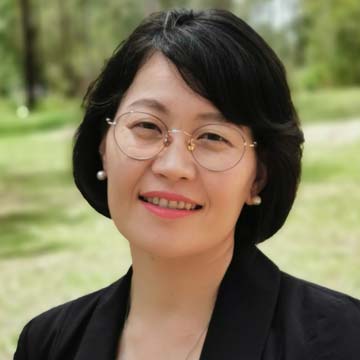
Dr. Jae-Eun Noh serves as a Research Fellow at the Gender and Women's History Research Centre within the Institute for Humanities and Social Sciences at Australian Catholic University (ACU), Melbourne Campus. Her work critically examines human rights frameworks, gender justice, and transnational activism, with current focus on faith-based responses to gendered violence among Korean diaspora communities.
Her academic foundation includes:
- BA in French Literature from Seoul National University (Republic of Korea)
- MA in Social Welfare from Seoul National University (Republic of Korea)
- MA in Social Development from the University of Sussex (UK)
- PhD in International Development from the University of Queensland (2015), dissertation: 'From a normative discourse to contextualised practices: a case study of a human rights-based approach in Bangladesh'
Dr. Noh's research program integrates human rights theory with emotional and ethical dimensions of development practice. She investigates how cosmopolitan identities emerge through transnational activism, particularly examining Korean migrants' advocacy around gendered violence. Her current Academy of Korean Studies-funded project analyzes faith communities' role in 'comfort women' survivor-activism in Australia, revealing complex intersections between religious frameworks and trauma recovery. This extends her longstanding interest in professional ethics, corporate accountability, and wellbeing of humanitarian workers.
Analysis of her 15 most recent publications (2021-2025) shows three dominant trajectories: (1) Emotional labor in development work (e.g., resilience through reflective practice), (2) Decolonial approaches to historical memory (especially 'comfort women' narratives), and (3) Korean diaspora activism at the nexus of human rights and faith. Her methodology frequently employs critical discourse analysis of NGO practices, with increasing attention to transgenerational trauma and religious epistemologies.
Dr. Noh currently directs the Academy of Korean Studies-funded project on 'comfort women' activism while collaborating with mindfulness researchers on educator wellbeing initiatives. Her grant portfolio demonstrates capacity to bridge academic research with community-engaged practice, particularly through partnerships with Korean migrant organizations and faith-based anti-violence groups. Though no formal advisees are documented, her work involves deep collaboration with survivor-activists.
As part of ACU's Gender and Women's History Research Centre, she contributes to interdisciplinary projects examining gendered dimensions of historical memory and contemporary social movements. The Centre provides critical infrastructure for her transnational collaborations with Korean diaspora networks and Southeast Asian human rights organizations.