معرفی
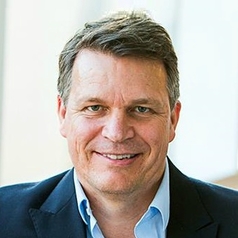
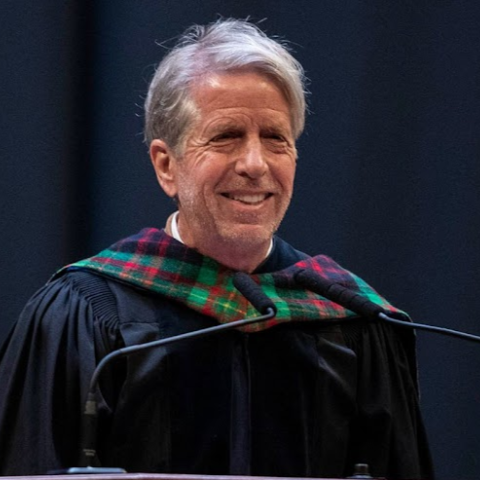
Jacob K Goeree serves as the inaugural SHARP Professor at the University of New South Wales (UNSW) Business School, following full professorships at Caltech and the University of Zurich. His academic home is the School of Economics within UNSW Business School, where he leads research in experimental economics and market design.
Goeree's research spans experimental economics, market design, auction theory, behavioral economics, and game theory. He is renowned for developing theoretical frameworks like Quantal Response Equilibrium (with Holt and Palfrey) and applying them to real-world market design problems, particularly spectrum auctions and environmental markets. His work bridges theoretical rigor with practical implementation, influencing policy decisions globally.
Analysis of his 15 most recent publications reveals a dominant focus on spectrum auction design (40% of works), combinatorial exchange mechanisms (25%), and behavioral foundations of strategic decision-making (35%). His research consistently addresses efficiency challenges in complex markets, with increasing emphasis on environmental applications since 2017.
Major awards and recognitions:
- Alfred P. Sloan Foundation Research Fellow
- Econometric Society Fellow (2012)
- Royal Netherlands Academy of Arts and Sciences Member (2014)
- President of the Economic Science Association
- Editor of Experimental Economics
Goeree has held significant editorial roles including Associate Editor for the Journal of Economic Theory and Games and Economic Behavior. His grant-funded work includes designing the US 700MHz spectrum auction ($19B revenue) and pollution permit markets for the Regional Greenhouse Gas Initiative. He directs UNSW's AGORA initiative, fostering interdisciplinary market design research.
Goeree leads the UNSW Market Design Lab, collaborating with government agencies and international organizations on spectrum allocation, environmental markets, and voting systems. Current projects focus on combinatorial exchanges for resource rights reallocation and improving voting mechanisms through alternative auction designs.