معرفی
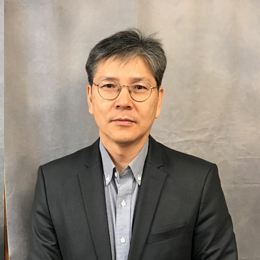
Dr. Insu Hahn is an Associate Professor in the Department of Chemistry and Biochemistry at Hampton University's School of Science. He holds a Ph.D. in Chemistry from the University of Akron and an M.P.H. from the University of Massachusetts, with additional degrees from Hanyang University in South Korea. His academic roles span teaching, research, and mentorship in biochemistry and analytical chemistry.
Dr. Hahn's educational background includes:
- Ph.D., Chemistry, University of Akron, 2003
- M.P.H., Public Health, University of Massachusetts, Amherst, 1998
- M.S., Chemistry, Hanyang University, Seoul, 1990
- B.S., Chemistry, Hanyang University, Seoul, 1988
His research focuses on biomedical proteomics, lipidomics, and metabolomics using mass spectrometry, along with computational chemistry of biochemical molecules and medicinal/natural product chemistry. He teaches core courses such as Biochemistry, Organic Chemistry, General Chemistry, and Analytical Chemistry. His recent publications reveal a strong trend in applying mass spectrometry and quantum chemical calculations to cancer biology, neurodegenerative diseases, and drug mechanisms, often involving student collaborators in undergraduate research projects.
Dr. Hahn has received numerous scientific awards, including:
- Faculty of the Year Award, Philander Smith College (2016)
- 1st Place Poster Award, Arkansas Academy of Science (2014)
- Best Poster Presentation, USCAP Meeting (2005)
- Distinguished Service Award, Philadelphia AMP Symposium (2006)
- Multiple scholarships and fellowships during graduate studies
He has secured research funding from NSF, NIH, and private foundations, supporting his work in mass spectrometry and biochemical modeling. Dr. Hahn actively mentors students, with numerous co-authored publications reflecting his commitment to undergraduate research. He is a member of the American Chemical Society, American Society of Mass Spectrometry, Virginia Academy of Science, and Arkansas Academy of Science. His work bridges analytical chemistry, biomedical research, and public health, particularly in addressing health disparities in cancer treatment among African Americans.