معرفی
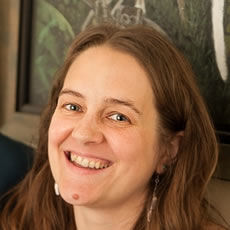
Professor Innes Cuthill is a faculty member at the University of Bristol's School of Biological Sciences, specializing in Behavioral Ecology. He holds a M.A. (Cantab.) and a D.Phil. (Oxon.). His research focuses on camouflage mechanisms, animal signaling, and ecological adaptations, with particular emphasis on predator-prey interactions and the evolution of protective coloration. His work combines experimental and computational approaches, such as genetic algorithms and generative adversarial networks (GANs), to study how organisms adapt to environmental challenges. Recent studies include investigations into habitat geometry's impact on visibility, olfactory communication in birds, and welfare issues in captive parrots. He has contributed to high-impact projects like the ARRIVE guidelines for reporting animal research and the Camouflage Machine framework for optimizing protective coloration. His interdisciplinary approach bridges biology, computer science, and environmental science.
Education:
- M.A. (Cantab.) - University of Cambridge
- D.Phil. (Oxon.) - University of Oxford
Research Interests:
- Camouflage evolution and effectiveness
- Animal communication and aposematism
- Ecological and evolutionary adaptations
- Animal welfare in captivity
- Computational modeling of biological systems
Publications Trends: Recent articles highlight advancements in understanding camouflage strategies, the role of habitat complexity in predator detection, and welfare challenges in captive animals. His work frequently intersects with applied fields like conservation biology and military technology (e.g., dazzle camouflage).
Grants and Advising: While specific grants are not listed, his active research program suggests involvement in collaborative projects. No student advisees are explicitly mentioned.
Labs/Teams: Affiliated with the School of Biological Sciences, collaborating with researchers like Professors Nick Scott-Samuel (Experimental Psychology) and William Browne (Education).