معرفی
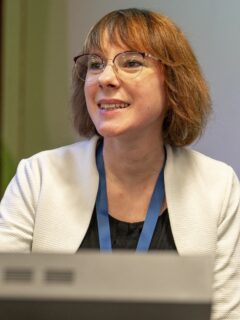
Ingrid Boas is a Professor at the Environmental Policy Group of Wageningen University, specializing in climate change-related mobilities, governance, and environmental policy. Her research focuses on the political dimensions of climate migration, particularly in borderlands and marginalized communities. She leads interdisciplinary projects funded by grants from the Dutch Scientific Organisation and Belmont Forum, involving collaborations across multiple countries. Boas holds a PhD in International Relations from the University of Kent (2014), focusing on climate migration securitization. She has held visiting fellowships at the UNU-IAS (Tokyo), Chinese Academy of Sciences, and the European University Institute. She is a co-founder of the Environmental & Climate Mobilities Network and contributes to EU climate mobility policy frameworks.
Education: PhD in International Relations (University of Kent, 2014), funded by UK Economic and Social Research Council.
Research interests include climate mobilities in vulnerable regions like the Bengal, West African, and Pacific borderlands; mobile cultural heritage of nomadic indigenous groups; and digital age impacts on migration patterns. She explores how climate change intersects with sovereignty, geopolitics, and development through methodologies emphasizing mobility and participation.
Her publications analyze climate migration myths, securitization strategies, and governance frameworks. Notable works address Bangladesh displacement dynamics, Tuvalu's digital nationhood, and pastoralist adaptation through mobile technologies. She advocates for inclusive policies recognizing climate justice and mobility rights.
Awards include VIDI and Veni grants, and she serves on steering committees for PERN and EU COST Actions. Her teaching includes courses on climate governance, migration theory, and the urban nexus of water-energy-food systems.
Boas co-leads a fisheries-focused NWA programme on climate resilience in Africa and advises governments/NGOs on climate mobility issues. She maintains active research partnerships across Europe, Asia, Africa, and Latin America.