معرفی
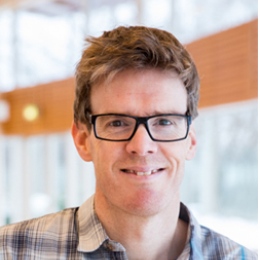
Iain Pitcairn is an Associate Professor of Ore Geology at Stockholm University's Department of Geological Sciences within the Faculty of Science. He maintains his office in Room R 431 at the Geohuset building (Svante Arrheniusväg 8 C). Pitcairn leads research activities focused on hydrothermal ore deposits and metamorphic fluid flow processes.
His educational background includes a Geology undergraduate degree from the University of Edinburgh (1998), an MSc in Geochemistry from the University of Leeds (2000), and a PhD from the National Oceanography Centre Southampton (2004) on "Sources of fluids and metals in orogenic gold deposits: The Otago Schists, New Zealand." Following postdoctoral positions at Queen's University Canada and Stockholm University, he established himself as a permanent faculty member, later being appointed deputy Head of Department in 2018.
Pitcairn's research centers on identifying metal and fluid sources in hydrothermal systems, with particular expertise in ultra-low detection limit gold analysis. His work spans multiple international field areas including the Skellefte District in Sweden, Central Lapland Greenstone Belt in Finland, and the Arabian-Nubian Shield in Egypt. He directs the Low Level Gold Lab (LLGL) at Stockholm University, where advanced analytical techniques are employed to study metal-depleted source regions.
His recent publications demonstrate a strong focus on gold-tellurium deposits in the Skellefte District, metal mobilization during metamorphism, and the relationship between carbonation processes and gold mineralization. The research shows consistent progression from fundamental fluid-rock interaction studies toward applied exploration models for critical mineral resources.
Pitcairn teaches mineralogy, metamorphic petrology, and ore geology courses at Stockholm University, contributing to the education of future geoscientists. His leadership extends to directing the Low Level Gold Lab and participating in the IGV's Geology group, which studies Earth as a dynamic system through integrated geological, geochemical, and geophysical methods.