معرفی
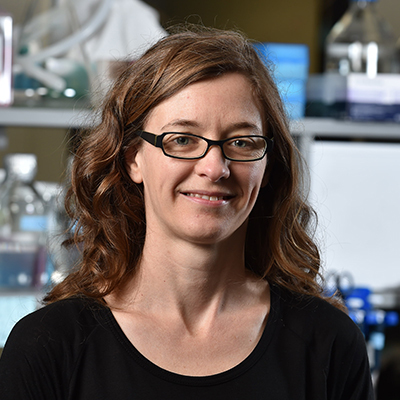
Hope Hollocher is an Associate Professor in the Department of Biological Sciences at the University of Notre Dame, where she also serves as Director of Graduate Studies. Her research integrates population genetics, genomics, and disease ecology to explore evolutionary mechanisms in non-human primates, particularly in Southeast Asia.
Education:
- Ph.D. in Biology, Washington University in St. Louis, MO
- B.A. in Biology, University of Pennsylvania, PA
Her research focuses on population genetics, landscape genetics, disease ecology, and evolutionary biology. She investigates how landscape features—physical, social, and anthropogenic—affect parasite transmission and genetic structuring in primate hosts. Her lab also examines interactions between prokaryotic and eukaryotic gut microbiomes that influence pathogen invasion. Using GIS and genomic tools, her team studies speciation, adaptation, and host-parasite coevolution.
The recent publications reflect a strong trend in primate disease ecology, landscape genetics, and molecular evolution. Her work combines field data with computational models to understand transmission dynamics and evolutionary relationships, especially in Macaca fascicularis and orangutans. Keywords across studies include parasite communities, microbiome interactions, Bayesian phylogenetics, and agent-based modeling of disease spread.
Scientific Awards:
- No awards explicitly mentioned in the provided text.
Dr. Hollocher advises graduate students and leads a research lab focused on evolutionary and ecological genomics. As Director of Graduate Studies, she plays a key role in academic training and program development. Her research has been supported by interdisciplinary collaborations with primatologists, virologists, and anthropologists, though specific grants are not listed. Her lab combines fieldwork in Indonesia and Singapore with molecular and computational analyses.
Laboratory and Research Team: The Hollocher Laboratory conducts integrative research at the intersection of evolutionary biology and disease ecology. The team employs molecular genetics, GIS, and ecological modeling to study non-human primates in complex landscapes. Collaborators include researchers from various institutions working on primate behavior, virology, and conservation.