معرفی
Elizabeth Archie is a Professor in the Department of Biological Sciences at the University of Notre Dame, where she holds the Nieuwland Collegiate Professorship. She leads the Archie Lab, which is dedicated to understanding the evolution of social behavior in animals, particularly focusing on wild baboons in the Amboseli Ecosystem, Kenya. Her research integrates behavioral ecology, immunology, and genetics to explore how social interactions affect disease transmission, microbiome dynamics, and individual health.
Her research interests center on behavioral and disease ecology, with a focus on how social organization influences parasite spread and immune function. She uses long-term population data and non-invasive genetic tools to study wild mammals. Her work spans multiple levels of biological organization, from populations to individual physiology and associated microbial communities.
The recent publications from her lab demonstrate a strong focus on microbiome heritability, social stress, dominance hierarchies, and parasite dynamics in wild primates. Her research consistently appears in top-tier journals like Science and PNAS, reflecting her leadership in integrating evolutionary biology with ecological and immunological data.
Scientific Awards:
- Nieuwland Collegiate Professor
- Clare Boothe Luce Assistant Professor
Archie actively mentors graduate students, including multiple PhD candidates, and leads the Amboseli Baboon Research Project. Her lab receives funding to support long-term field research and employs a dedicated database manager. She collaborates widely with researchers at Duke University, the Smithsonian Institution, and other leading institutions.
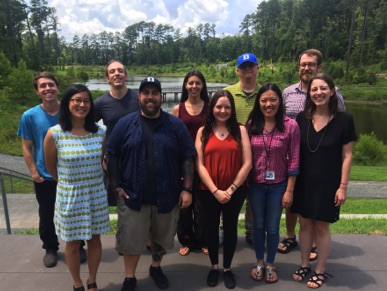
The Archie Lab includes postdoctoral researchers, PhD students, and research associates working on projects related to microbiomes, reproductive biology, and social behavior in wild primates. The lab emphasizes interdisciplinary approaches combining field observations with molecular and statistical analyses.